Are you planning to extend your kitchen in the new year? Check out our round-up of inspirational projects, from sustainable sanctuaries to characterful additions…
Let’s be honest, a kitchen extension is a huge investment, especially with the cost of materials only ever seeming to go up. So, when it comes to designing your dream extension, it needs to be cleverly planned with a focus on maximising the space available and catering for multiple activities. That said, it also needs to be beautiful, inspiring, imaginative – who wants to spend all that money only to have a bland box stuck on the back of their house?
Architects and kitchen designers are becoming increasingly creative with their designs, ensuring that these additions don’t just bring extra space, but also enrich the homeowners’ day-to-day lives, improve their wellbeing, and stand the test of time.
Take a look at KBB journo Charlotte Luxford’s edit of inspiring examples to see what’s possible with your space, no matter how big or small…
Glorious views
This project proves that a few thoughtful design ‘moments’ can turn a new addition into something a bit more special. Before, the ground floor was made up of a hodgepodge of disparate elements, so Sketch Architects were brought in to create one single, cohesive extension, alongside Amanda Holt Interiors.

The glazing creates a ‘wow’ moment as you enter the room, with floor-to-ceiling windows providing views onto the garden and a large arched Crittall doorway leading onto the patio.
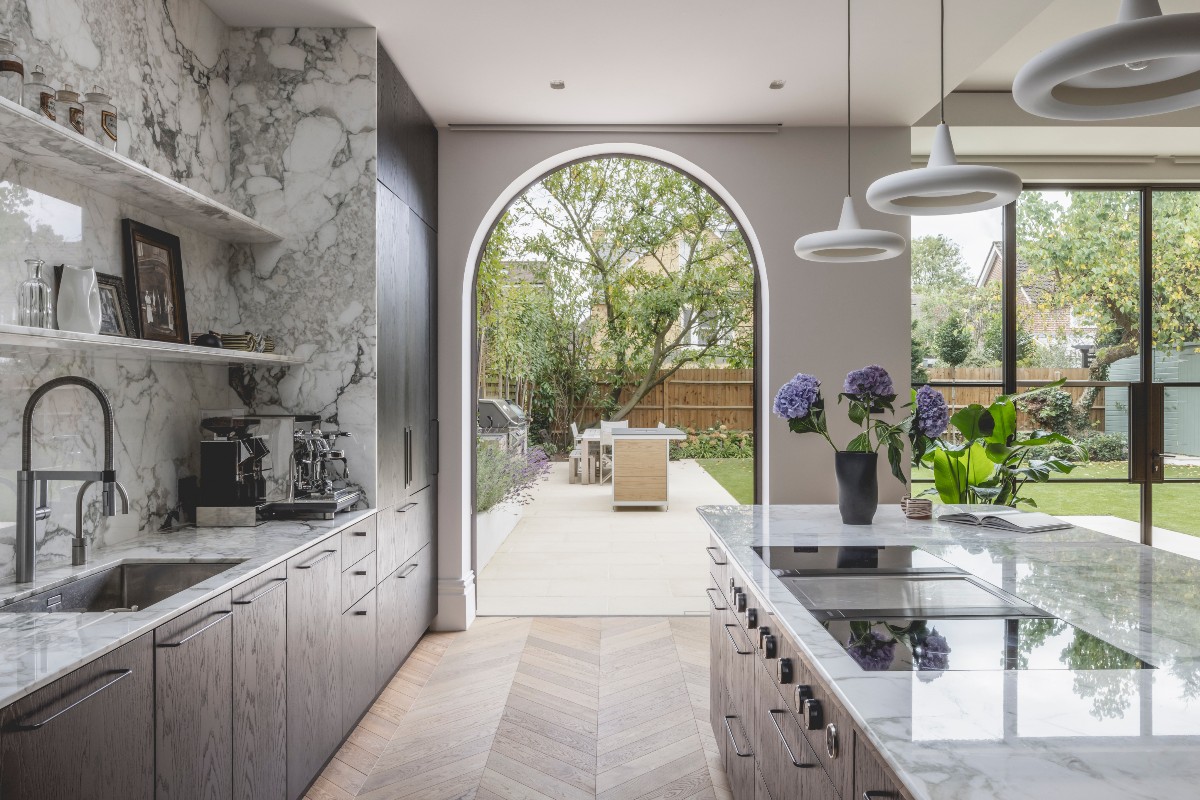
The kitchen itself, designed by Matrix Kitchens, features dramatic black-stained timber, with a statement fluted island providing texture and contrast against the marble worktops and backsplash. The consistent use of curves unifies the space, with the circular rooflight, pendant lights, and oval table all referencing the arched doorway; a nod to the house’s Arts & Crafts heritage.
The perfect spot for hosting
As owners of a bespoke luxury catering business, Opus 11, Charlie and Joshua Karlsen wanted a serene yet stylish extended kitchen space that would serve as the ideal spot for hosting regular dinners for clients, collaborators, and colleagues, as well as functioning as a practical, everyday kitchen.
Studio McW added a side extension to maximise the full width of the property and squeeze in a 12-seater dining table, while a sweeping curved wall connects the side addition to the modest one-metre rear extension.
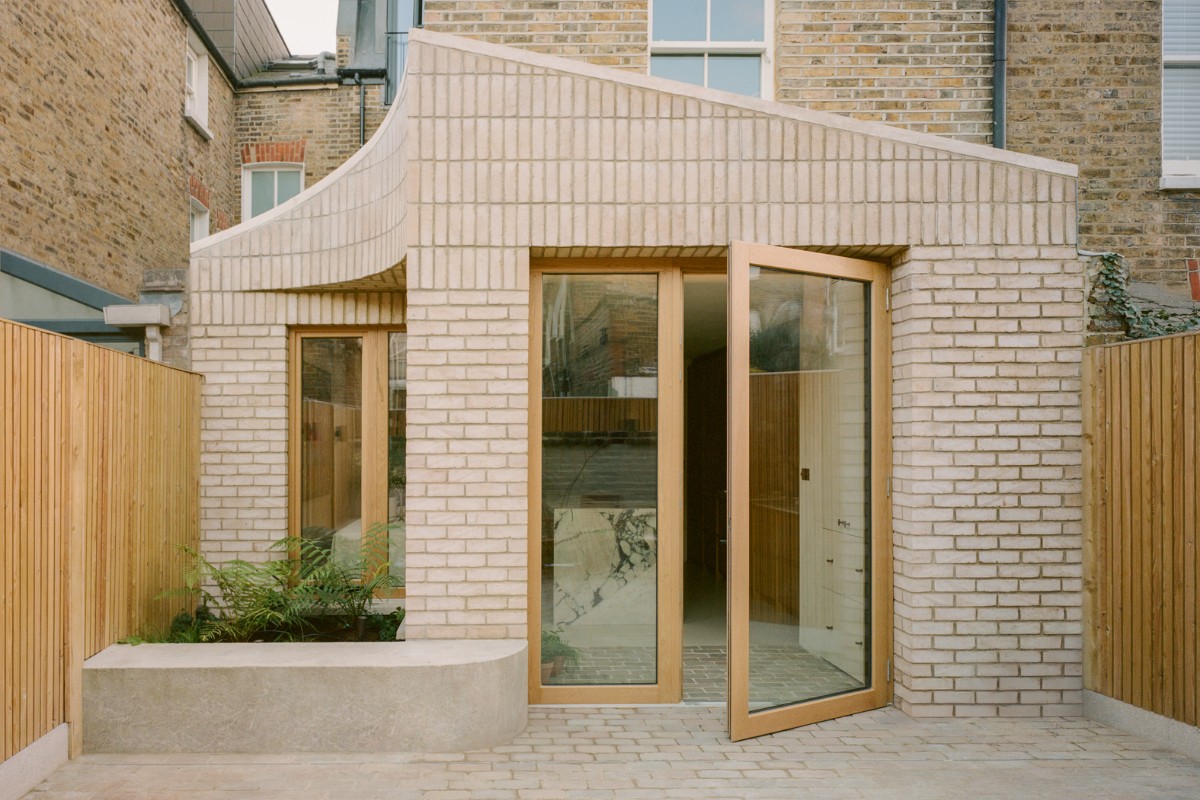
A curved theme continues in the kitchen, with an arched oak alcove designed by Studio McW and made by Idle Furniture providing wow factor, while a monolithic Violetta marble kitchen island offers an informal gathering space. An internal courtyard sits in the centre of the home, allowing natural light to pour in, while offering views out towards the garden beyond.
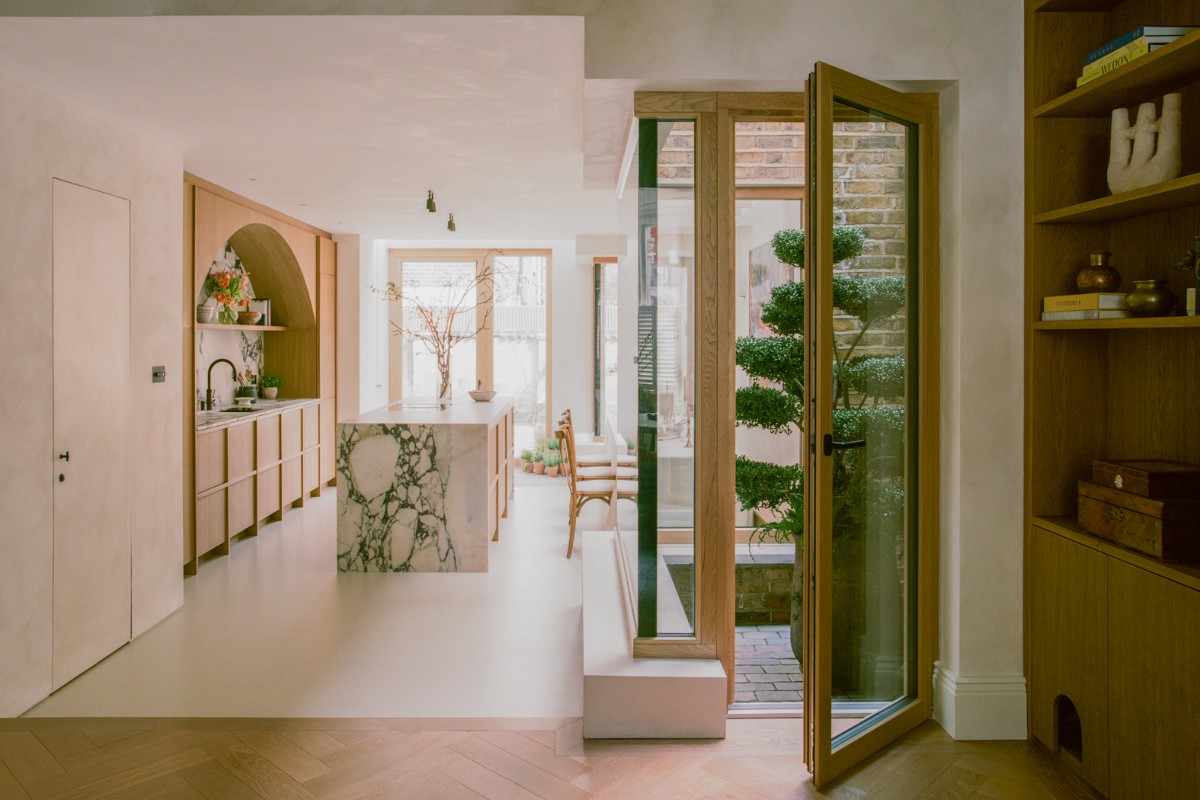
Modern rear extension
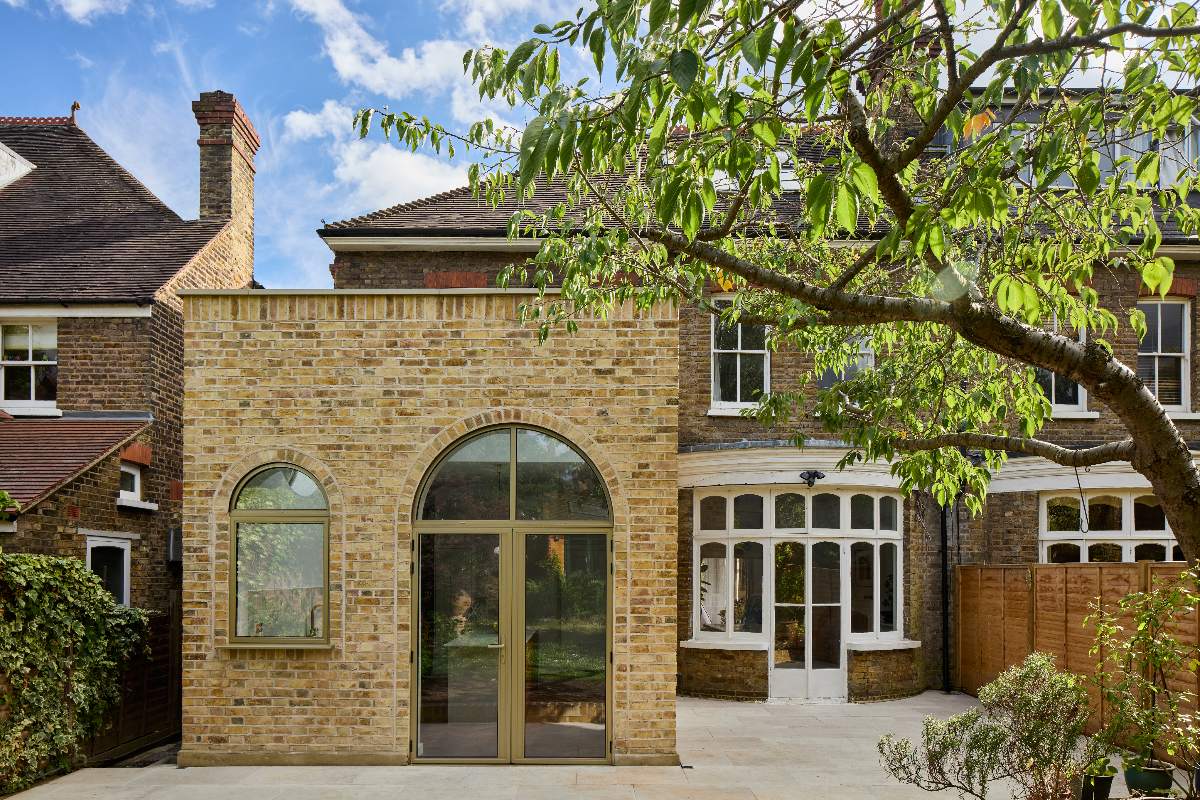
Honouring the character of this unique Arts & Crafts home was at the forefront of this sympathetic yet modern rear extension, designed by Wellstudio Architecture. The original house, built by Ted Christmas, sits within the Perry Vale and Christmas Estate Conservation Area in south London. The starting point for the project was a much-loved, curved bay window in the reception room, which inspired a series of playful arched glazing to create focal points and moments of drama, while also flooding the space with natural light.
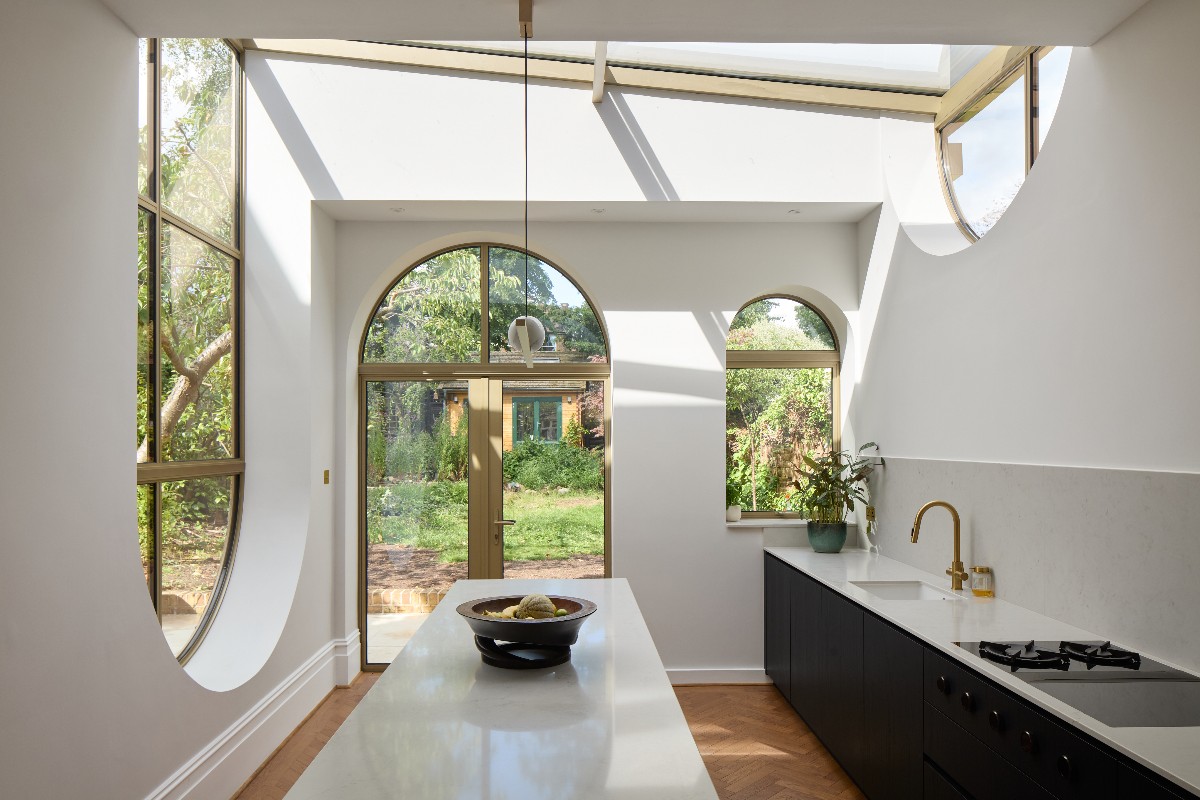
The pièce de résistance is a large, inverted arch incorporating a window that extends almost the full height of the extension, continuing horizontally onto the flat roof, establishing a seamless glass wraparound. At the bottom of this arch, the curve forms a small window seat. It’s a triumph in blending old with new – playful yet thoughtful.
Light-filled extension
A common issue with many infill extensions is the potential to lose light in the spaces where it’s most needed or wanted. For this home in south London, Allen Architects and contractor London & Sons actively worked to avoid this by relocating the utility and downstairs cloakroom to the darker centre of the floor plan, which allowed the open- plan kitchen-diner and living areas to gain as much daylight as possible.
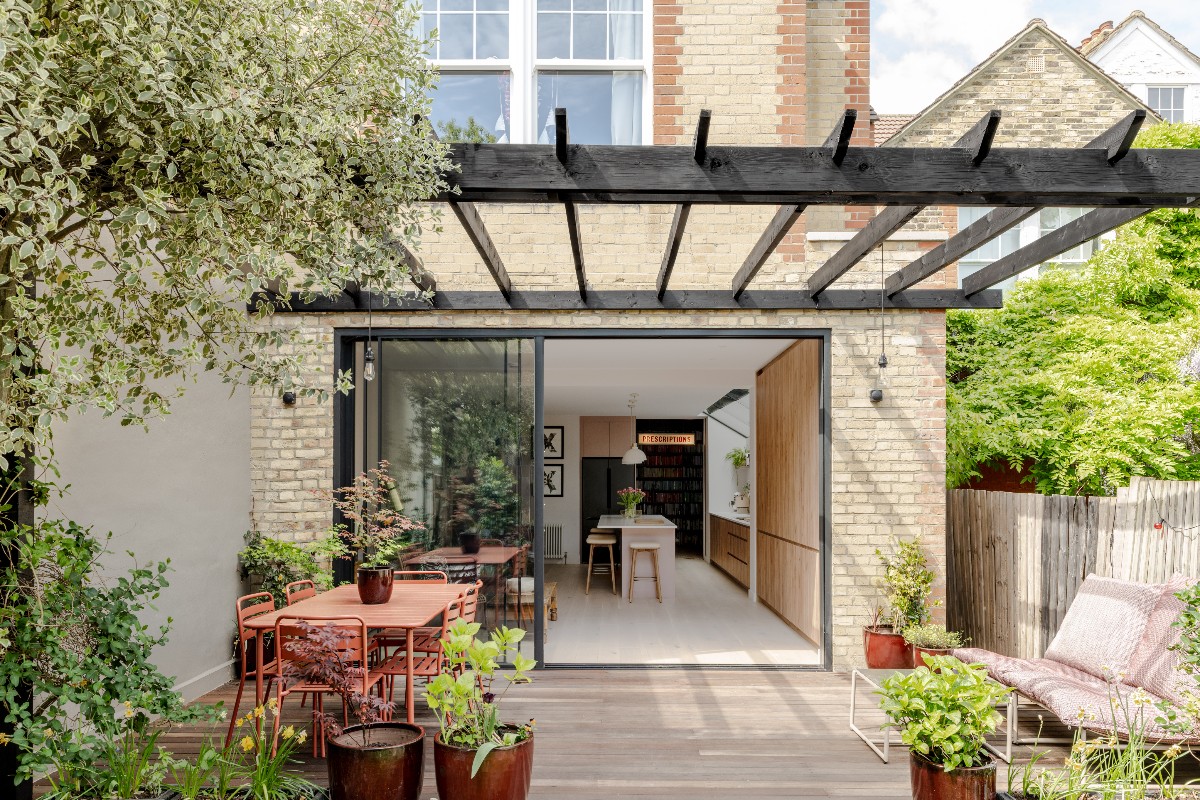
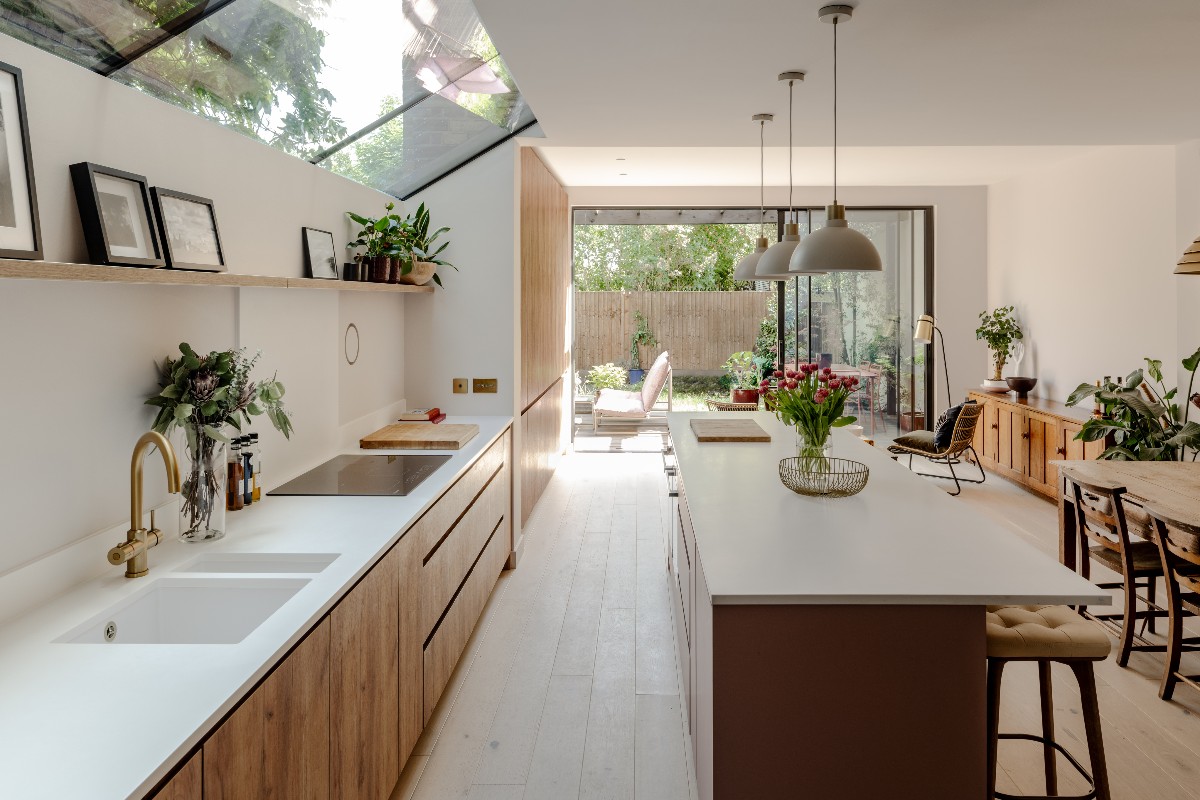
A glazed roof along the length of the kitchen and full-width glazed sliding doors help to flood the space with sunlight as well as create a stronger connection to the garden/terrace beyond. The kitchen feels calm and clutter free thanks to the use of open shelving over wall cabinets, and appliances, which sit tucked away behind closed doors. Beyond the kitchen sits a snug-library, which leans into the cocooning and cosy feel of an inherently darker space.
Waste not, want not
Former Great British Bake Off contestant, food writer and doctor James Morton and wife Fenella Barlow-Pay wanted to transform their 19th-century terrace in Glasgow into a shining example of how Britain’s old housing stock can be climate-friendly, too. The couple worked closely with Loader Monteith to take it as far to net zero as possible by using Passive House principles, guided by Loader Monteith.
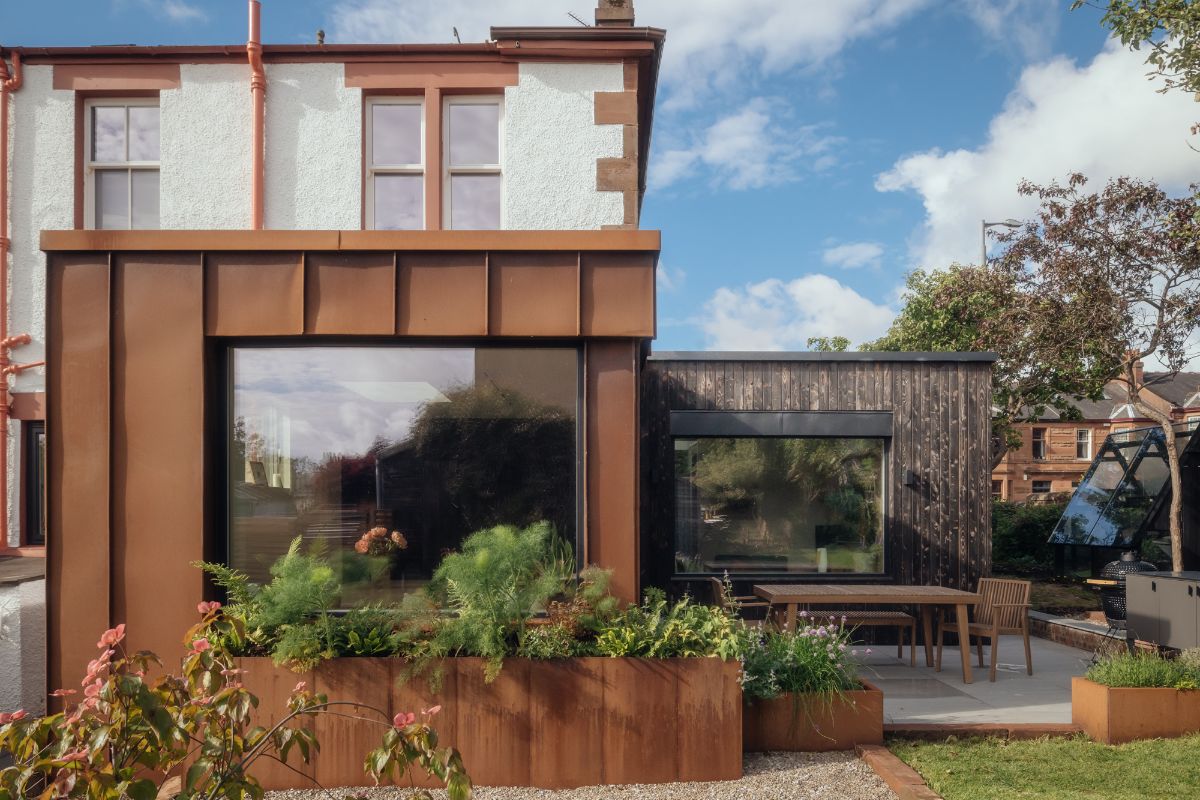
‘Waste not, want not’ was the motto for this build: an underused 1970s side extension was retained and refurbished to create a light-filled open-plan living space. The birch ply kitchen, designed and CNC-cut by Fenella herself after researching 3D design, has a dark Indian ink finish. The corten steel and burnt larch extensions offer easy access to the thriving kitchen garden and a new greenhouse made from salvaged glass.
Sustainability was deeply woven into the renovation, with the installation of an air source heat pump and thick insulation cutting their energy bills by a third, plus the use of non-toxic finishes and breathable natural materials creates a healthy indoor environment.
Calm and contemporary
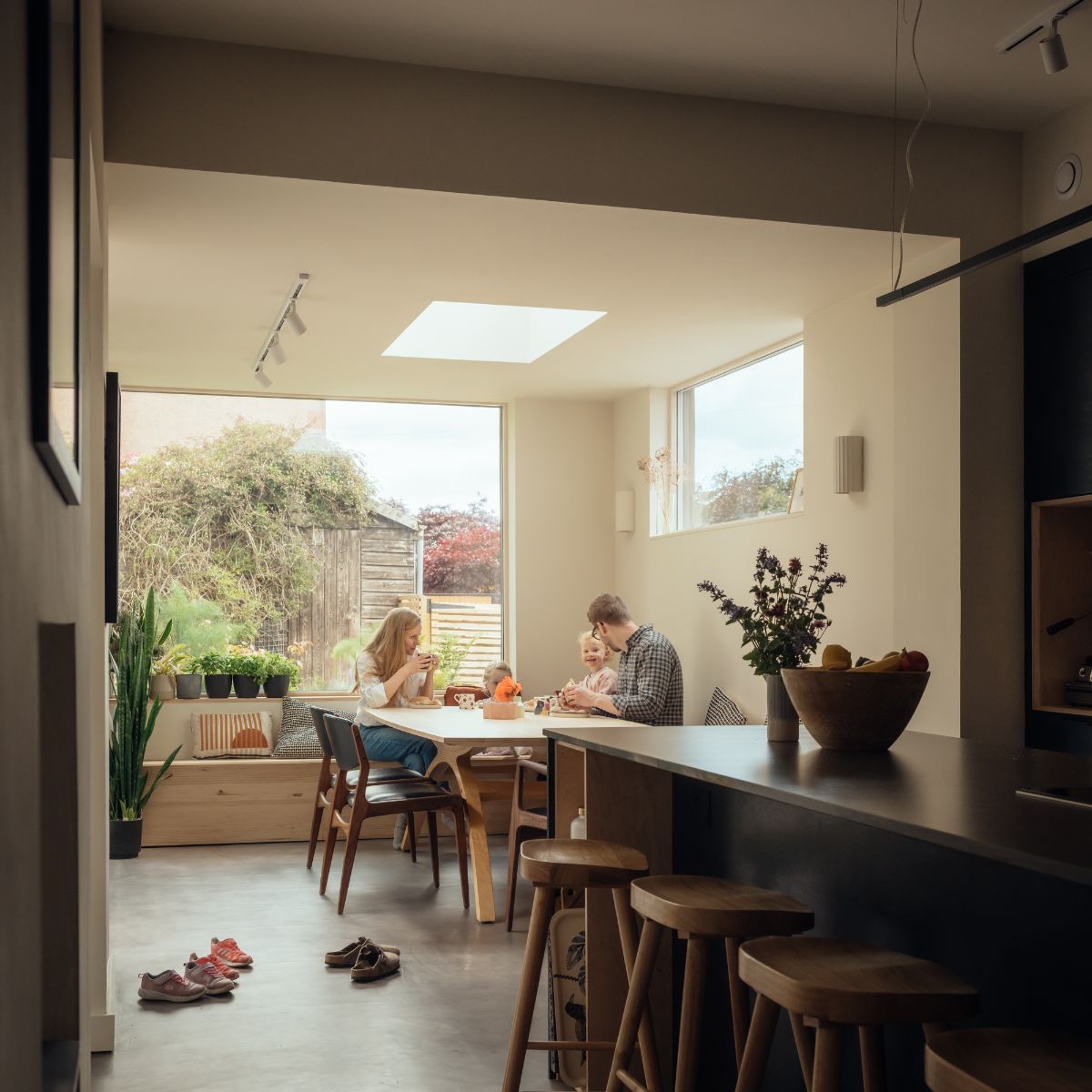
While its traditional façade doesn’t give the game away, this neglected Victorian villa in Kent has been completely transformed at the back, with a contemporary 50 sq m rear extension that was built by the owners themselves using Studio Bark’s U-Build modular timber block system.
The extended space features a large kitchen-diner, utility, pantry, and a new side entrance with cloakroom, while a triple-height atrium brings light and breathing space to the centre of the house, as well as linking old and new.
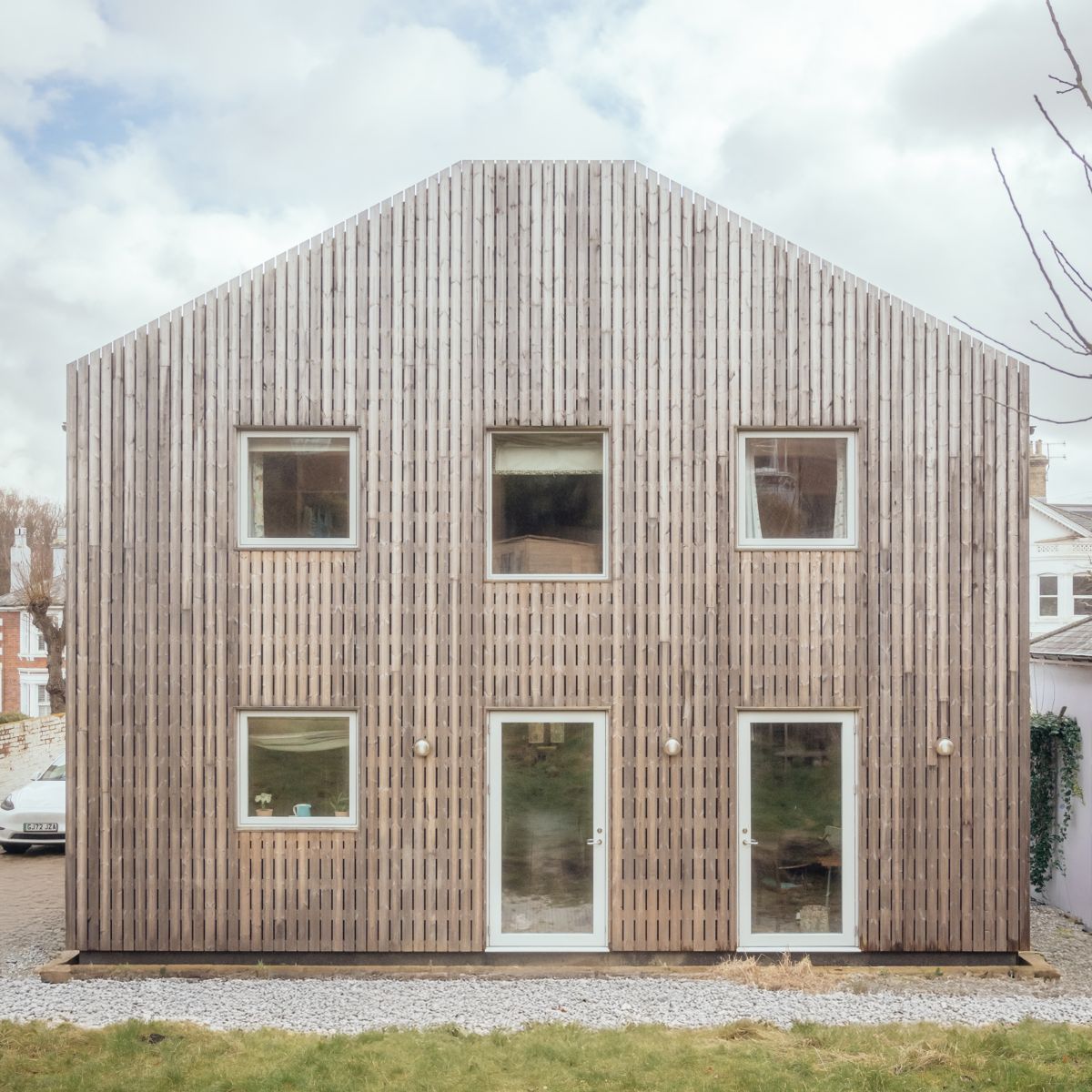
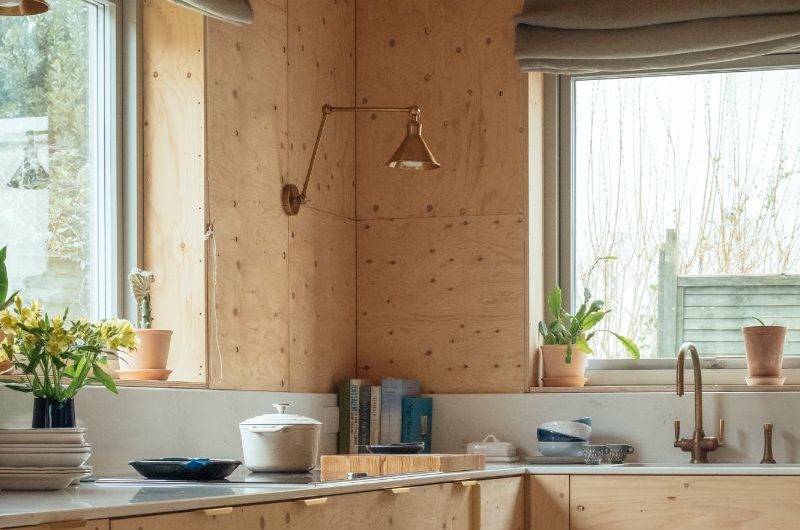
A material palette of cork, wool, and wood fibre, ensures excellent insulation, moisture balance, and indoor air quality, and adds a calm and contemporary aesthetic to the new addition. Not only that, an air source heat pump and MVHR system has replaced fossil fuels entirely, cutting energy bills by 75%. What’s particularly clever is that the modular extension can be disassembled and reused in the future.
“Before, it was stressful, with draughty rooms and freezing bathrooms,” says owner Grace. “Now, it’s a place where we can expand and contract as a family, with warmth, light, and flexibility built in.”
Spacious kitchen-diner extension
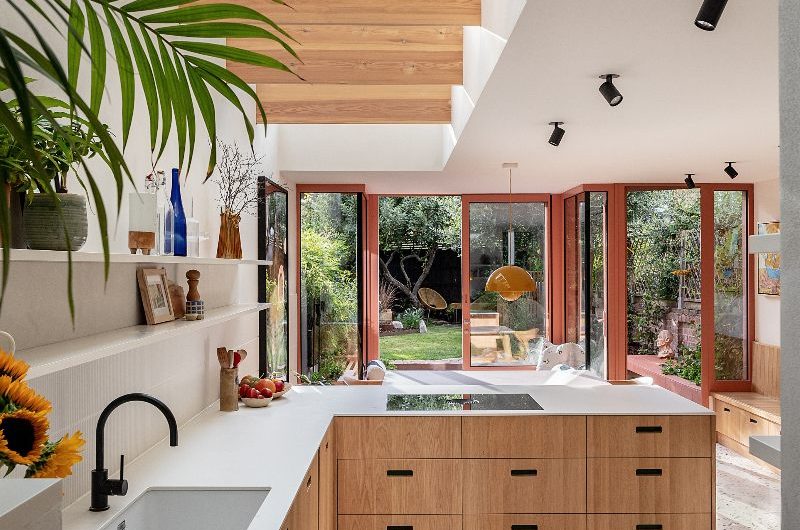
This long and skinny east-London home lacked sufficient space for the owners to relax and entertain in. To solve the issue, architecture firm Emil Eve reconfigured the internal space and used the full width of the property to create a spacious kitchen-diner extension.
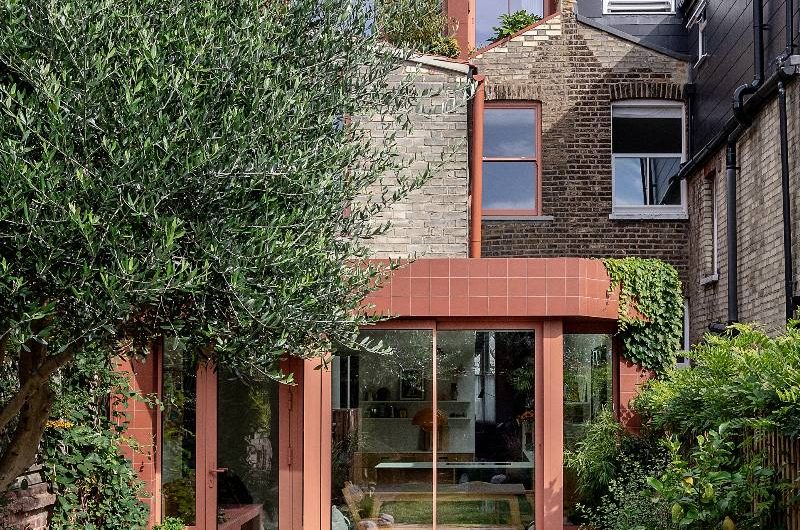
Natural light was key to the project; windows stretch to the ceiling, with glass-to-glass corners and frameless glazing to maximise the garden views. A deep window seat with tall sliding doors creates a deeper connection to the outdoors, with external bench seating also providing a spot to perch and encouraging interaction with those inside.
While extensions can often create dark spots internally towards the middle of the house, Emil Eve installed a generous rooflight with oversized timber louvres that runs almost the full depth of the space, pulling in natural light. The exterior and interior is unified by the use of a terracotta and timber palette, creating a warm yet modern look.
Chic rear kitchen extension
This project is a classic example of a single run and island layout that often works well in rear kitchen extensions. Here, there are clearly defined zones for cooking, dining, and entertaining. “The island bar area became a natural focal point, perfect for casual breakfasts, evening drinks, or chatting with friends while cooking,” says Rebecca Nokes, design director at John Lewis of Hungerford.
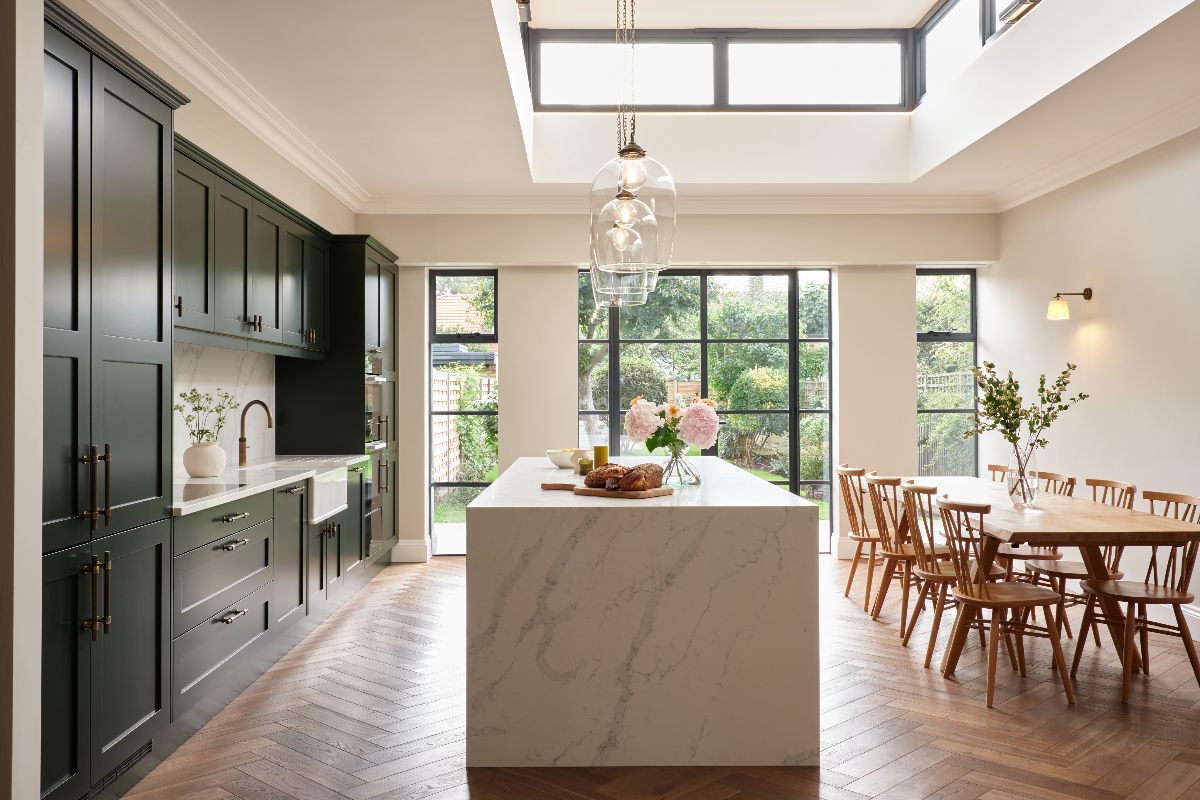
In the kitchen, Rebecca focused on balance; combining generous storage with plenty of surface space so the kitchen feels uncluttered but still highly practical for everyday use. “My top tip for anyone planning a kitchen extension would be to consider sightlines from key areas like the garden or dining table, and make sure lighting can adapt from bright and functional to warm and atmospheric for evenings,” she adds.
Think outside of the box
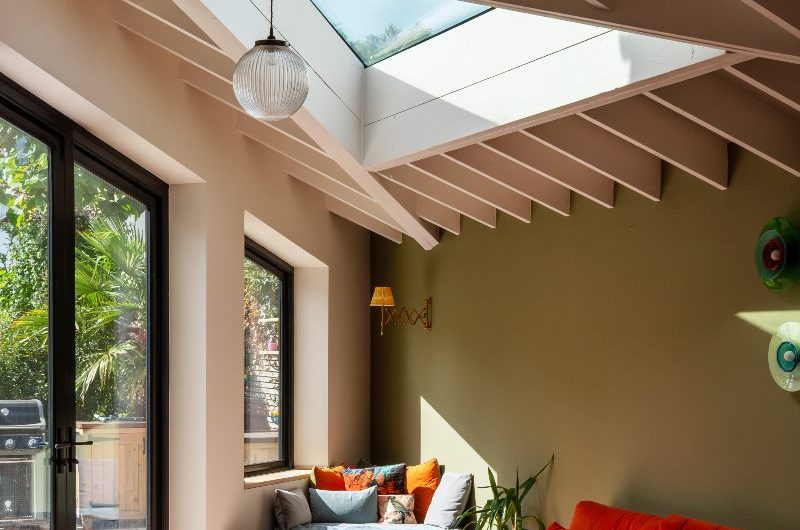
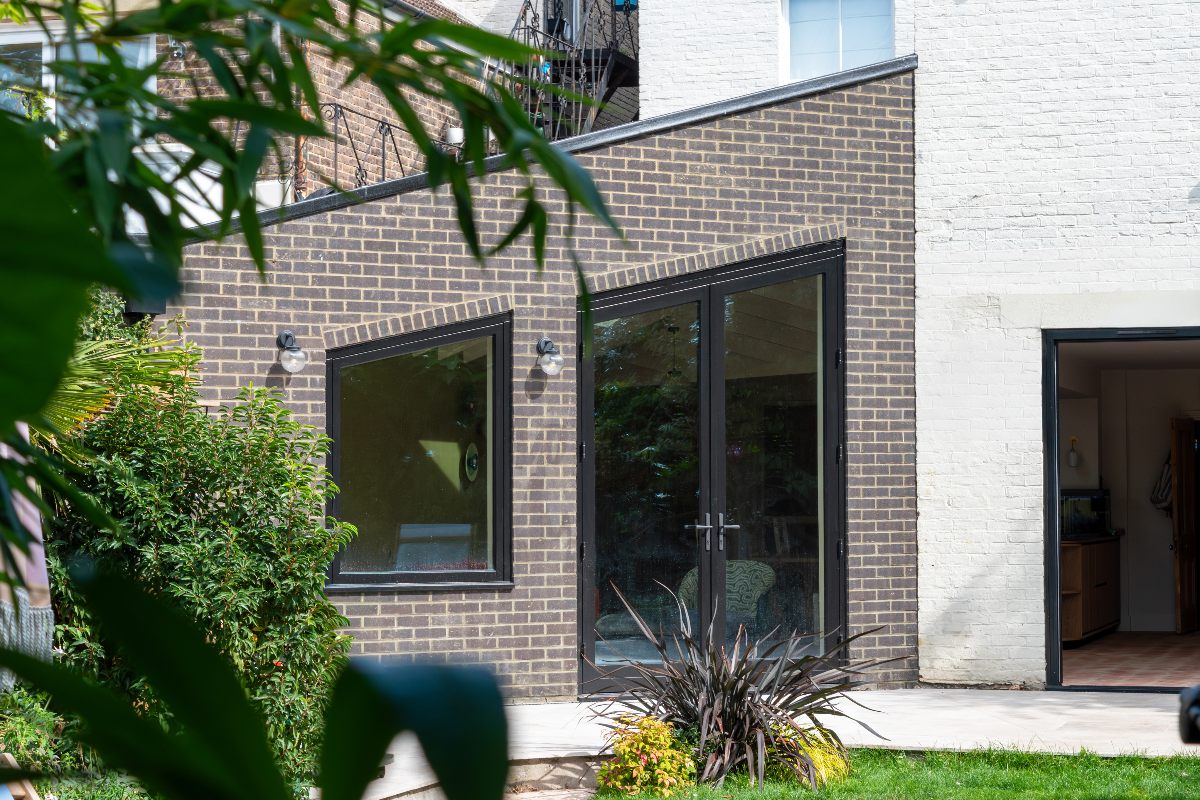
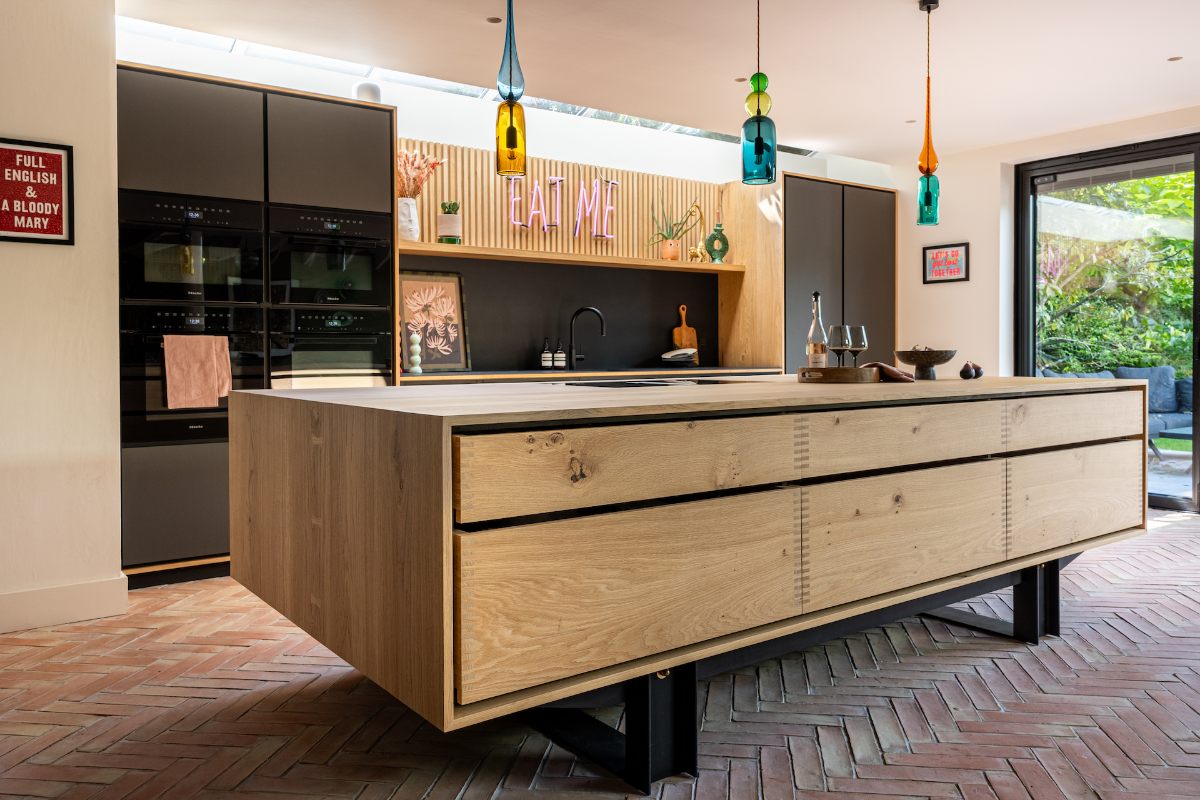
The owners of this Brighton home wanted a side-return extension that didn’t look simply like a box stuck on the side of the house; so, they worked with FAB Architects to create something more unique. The firm designed an angled addition with a distinctive triangular roof. The exposed beams draw the eye upwards and carefully positioned rooflights cast playful triangular patterns of light and shadow, bringing the interior to life on sunny days.
On the kitchen side, the owners worked with Wood Works Brighton to create a bold yet practical kitchen design. At the heart of the space is a solid oak floating island, supported by steel legs. Black Valchromat cabinets and a dark Richlite worktop offer a refined and contemporary look with practicality and sustainability in mind. The design remains slick and uncluttered thanks to slide-and-hide double pantry doors.
Spotted on social
Enjoyed this post? Click here for your guide to the different types of kitchen extension
About Post Author