From Scandi-style timber to tactile microcement, discover how this couple’s time abroad shaped their Surrey home’s design…
When creating their new kitchen, Anna and Jeff were influenced by their time and experiences abroad. Here, we discover how these choices shaped the design for their blended family.
Anna, please tell us a little about your home…
It’s a 1960s bungalow that was extremely dated when we moved in – everything was painted in Magnolia, inside and out, and all the skirting boards, doors and doorframes were highly varnished pine – but it was solidly built and had so much promise. What really drew us in was the generous size of the plot and the garden, which we immediately saw had enormous potential.
I live here with my husband Jeff, who is Canadian, my teenage son, and my two teenage stepdaughters. We’ve made this house a true family home, adapting it to the needs of our blended family as we’ve grown together. The house actually came with planning permission when we bought it, but after living in it for a few years, we realised that wasn’t the right approach.
Spending time in the house taught us so much – where the sun hits in the morning, where we naturally gravitated as a family, which parts of the house felt happiest. From that experience, we completely reimagined the plans and decided to extend to the side of the house instead.

What was the kitchen like before?
The original kitchen was a small galley space at the back of the house, quite dark and cramped. It opened into a tiny dining room, but with a family of five it was always a struggle. We quickly realised that if this house was going to work for us long-term, the kitchen had to be larger and far more functional.
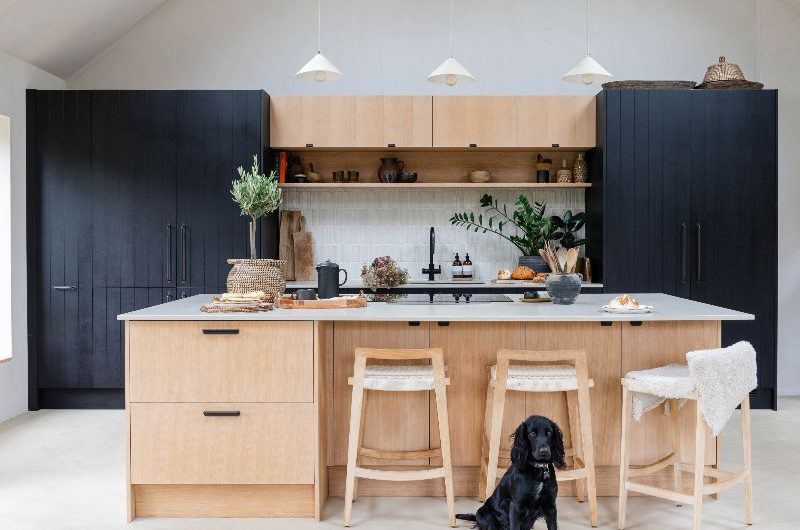
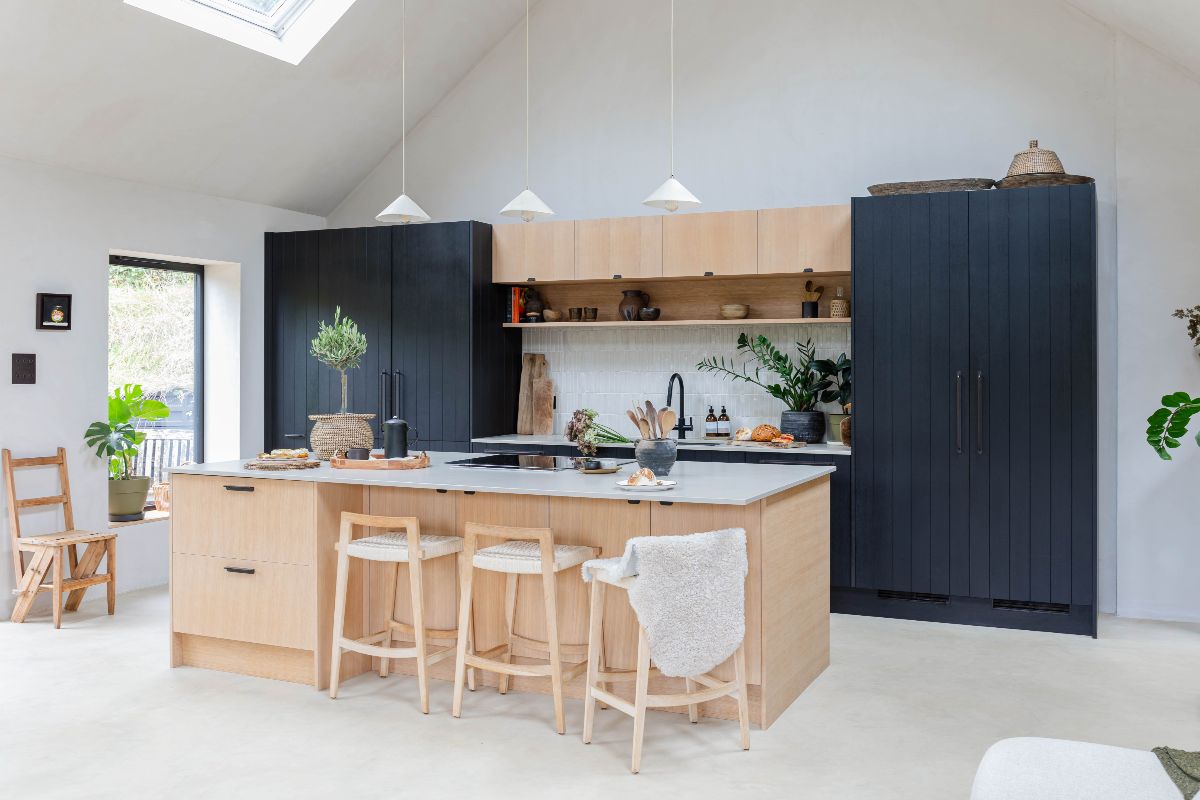
From the beginning, we envisioned a bright, open, sociable space – somewhere we could cook, eat, entertain, and simply spend time together. When we extended, we didn’t just want a ‘bolt-on’ extension; we wanted something that felt striking and unique, with personality. Both Jeff and I have been influenced by design abroad – his Canadian roots, my time spent in Scandinavia, and my fascination with Japanese design. Together, those influences shaped our choices for the kitchen.
Tell us more about the kitchen design now…
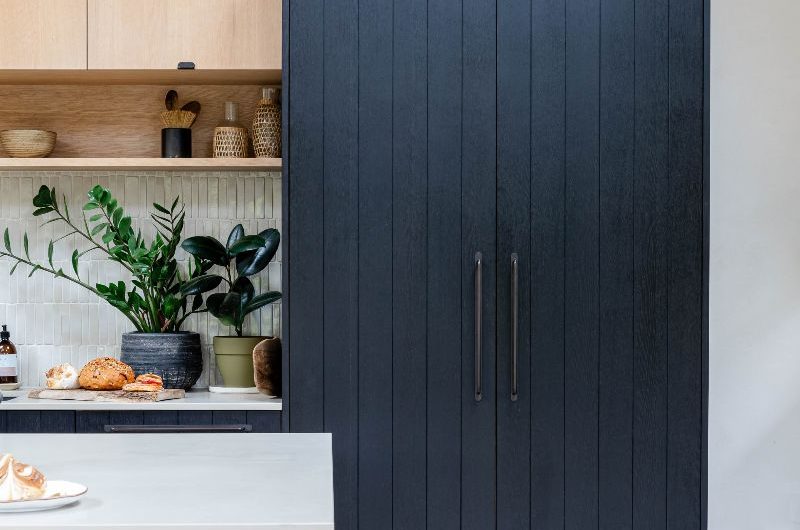
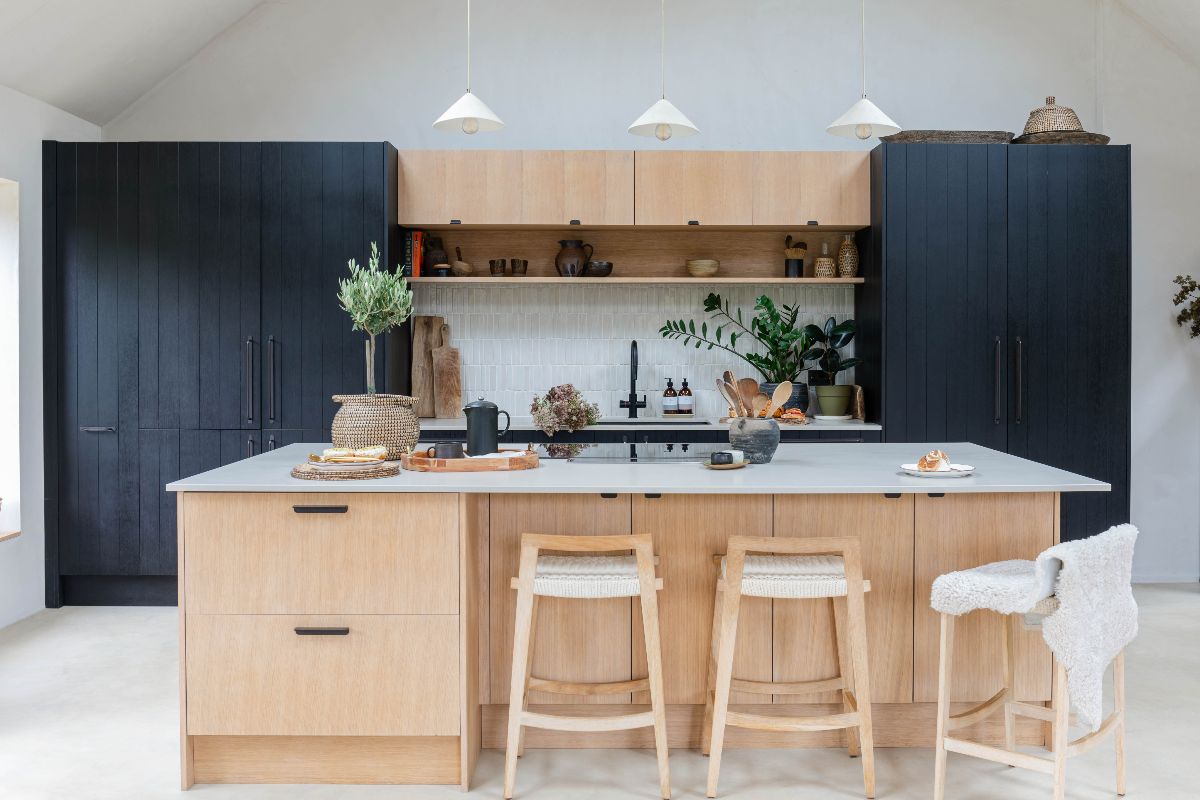
Our brief was ambitious, but our budget wasn’t! We had to think creatively. We knew we wanted interesting wood finishes and a kitchen that reflected the new black cladding of the house but in a softer, textured way – inspired by Japanese burnt wood, balanced with paler, Scandi-style timber. A ‘Scandinese’ aesthetic.
A fully bespoke kitchen wasn’t realistic, so after a lot of research, we discovered companies who make unique, design-led fronts for standard Howdens or Ikea carcasses. Eventually, we found Husk, and we loved both their quality and their finish – without the jaw-dropping price tag. That choice gave us the freedom to achieve a kitchen that looks completely bespoke, but was still attainable within our budget.
Did you have any musts and must-nots?
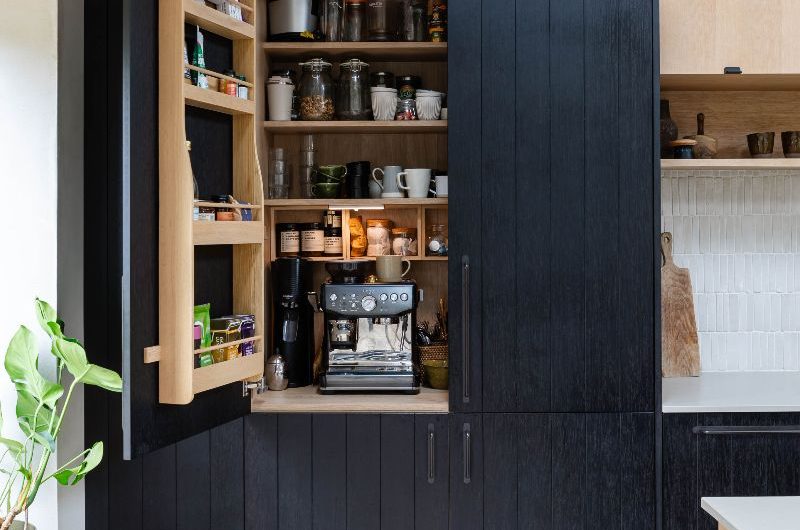
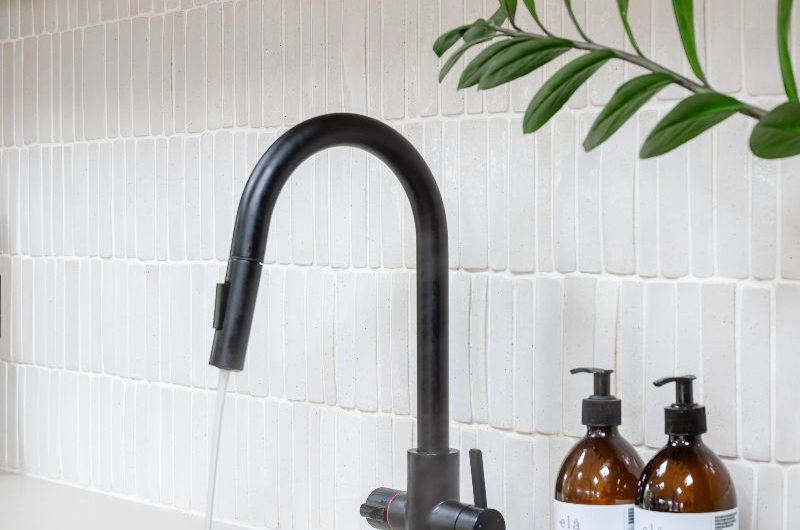
A pantry-style coffee cupboard was top of our list – we wanted all the appliances hidden away but easy to access. It’s now one of our absolute favourite features. A boiling-water tap was also a must, and a large island was non-negotiable, too – after years of tiny worktops, we craved that central hub for cooking and entertaining.
We’d also been living with a half-size fridge and freezer before, which, for a family of five, was a daily headache. So, a full-sized fridge-freezer was a priority.
How was the design process?
This was where Jeff and I really thrived. We’re both creative by nature, and we enjoyed sourcing materials, comparing samples, and piecing everything together. It became a puzzle: how to make the space look high-end and unique without overspending. Working with Howdens designers helped us pin down a functional layout, and then we layered in the finishes and details that made it our own.
Can you talk us through the kitchen layout?
As a blended family, our children aren’t always all here, but we wanted to create a space that felt generous and welcoming whenever we are together – and somewhere we could entertain friends, too. The open-plan kitchen, dining, and living areas flow into one another, with the island as the central hub.
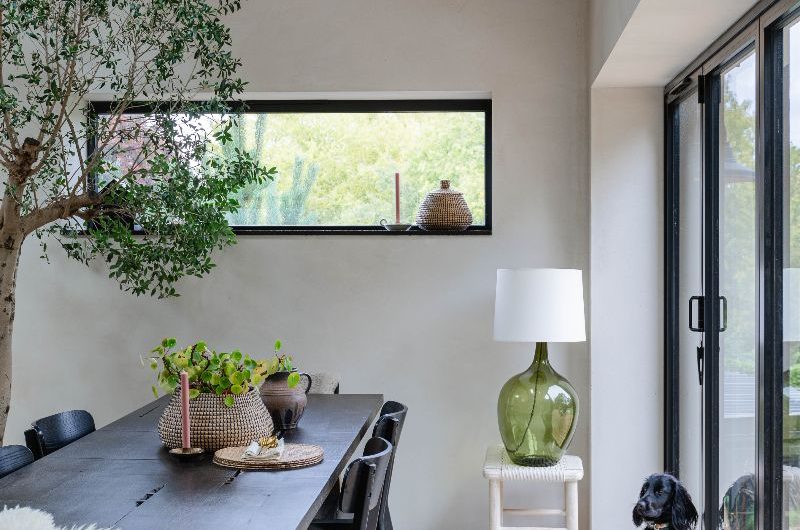
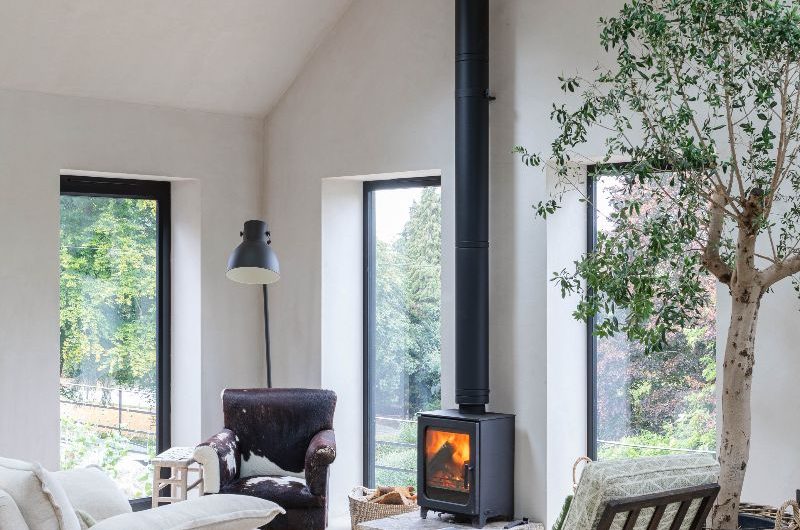
The dining table and log burner create a second gathering point – ideal for homework, board games, or relaxed evenings. The space is deliberately versatile: large enough to handle teenagers and guests, but cosy enough when it’s just Jeff and me.
How do you feel about the space now?
We absolutely love it – it has transformed the way we live. I’d describe it as a sociable, calm, and quietly striking space. My guilty pleasure is coming downstairs early in the morning when everyone is still sleeping, lighting a fire, making a coffee, and sitting in front of the wood burner with our dog, Dash.
Photography: Kayley Trippick
This house tour was featured in the January 2026 issue of Kitchens Bedrooms & Bathrooms magazine.
Enjoyed this post? Click here to discover a homely kitchen that celebrates Japandi minimalism
About Post Author