Are you in the market for low-maintenance yet high-impact surfaces for your kitchen or bathroom renovation? Enter: large-format tiles.
Large-format tiles are sleek and stylish, offering a pretty and practical solution for busy households, so it’s easy to see why they are increasingly sought-after. So, to bring you the lowdown, I’ve asked the experts for all you need to know, from benefits and key considerations, to where they look best…
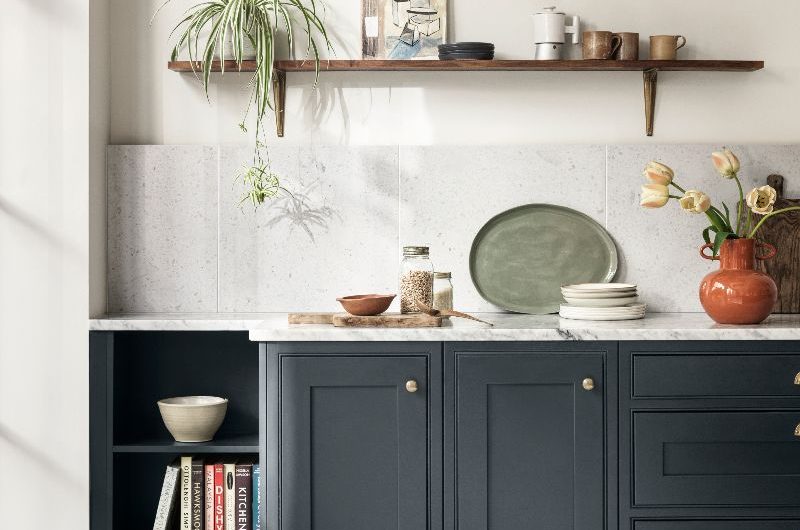
Benefits
This style of oversized tile is particularly rising in popularity thanks to the uniform look you can achieve, says Harriet Goodacre, style and interiors consultant at Topps Tiles. “They can really help to create the illusion of space thanks to their seamless finish, which is great for making smaller rooms appear larger than they are,” she explains. “Fewer joints means less grout to clean and a more uninterrupted surface, which is especially useful in kitchens and bathrooms. They’re also very robust, so they work well in high footfall areas of the house.”
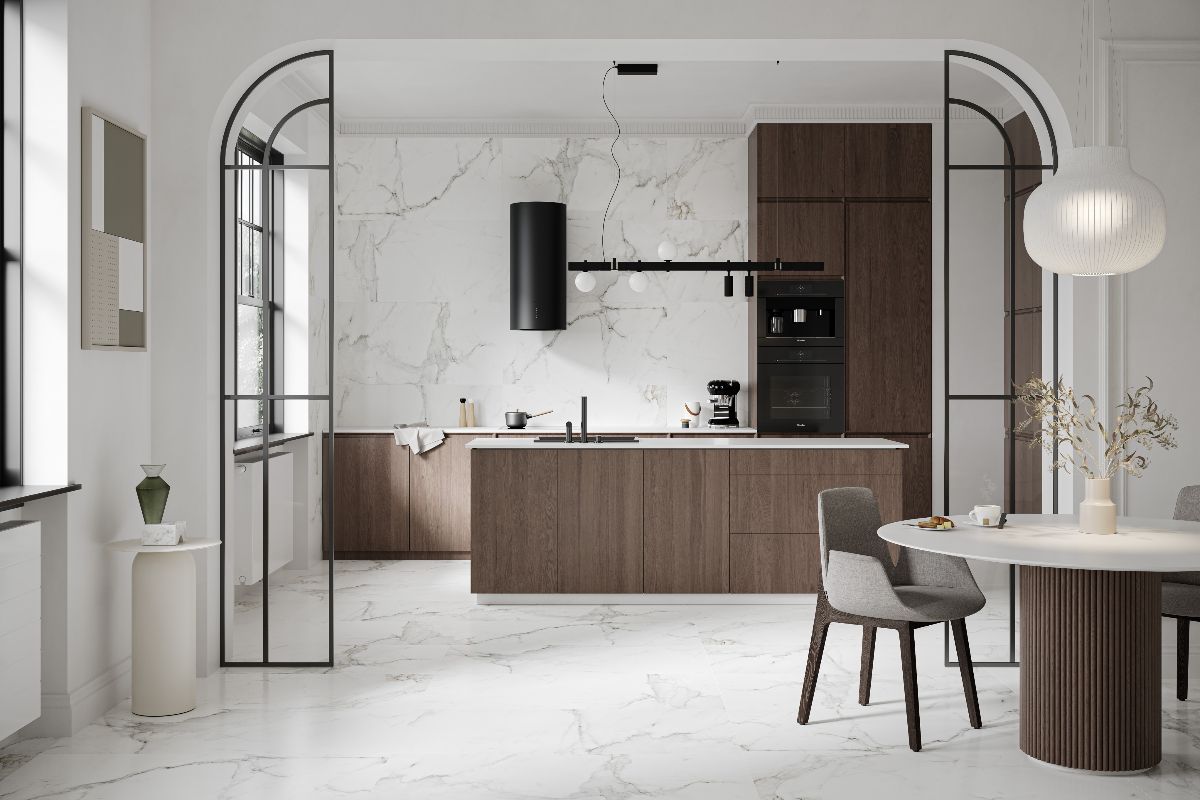
What’s more, because of the advancement in the manufacturing process, you can now find an array of tiles with tactile, realistic stone, marble, or concrete-inspired finishes, says Harriet. “These effect tiles are perfect if you don’t want the associated upkeep of those materials, as they’re durable but tend to be much lower maintenance.”
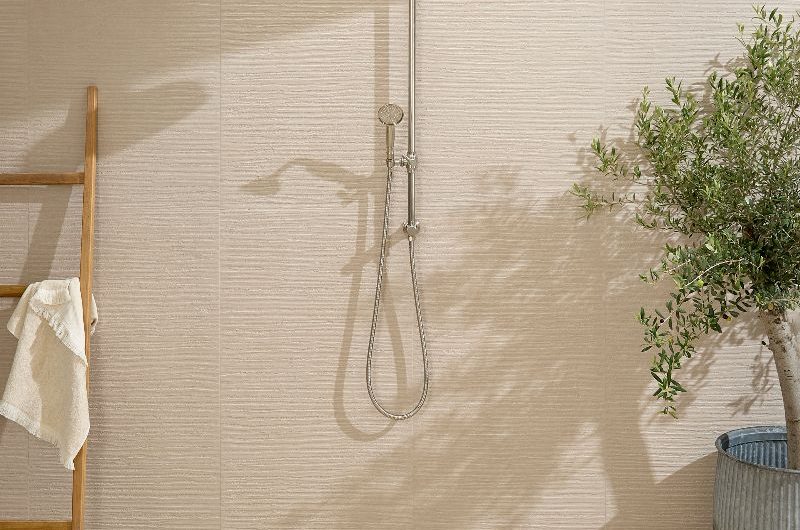
Where should you use large-format tiles?
Isabel Fernandez, director at Quorn Stone, says large-format tiles work well in open-plan rooms, especially those with an indoor-outdoor connection, as “the continuation of the tile combined with minimal grout joints creates a truly seamless look”.

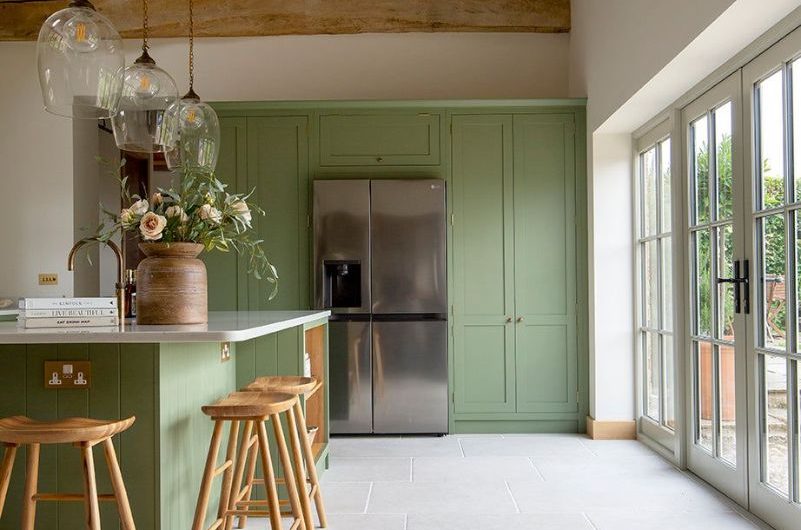
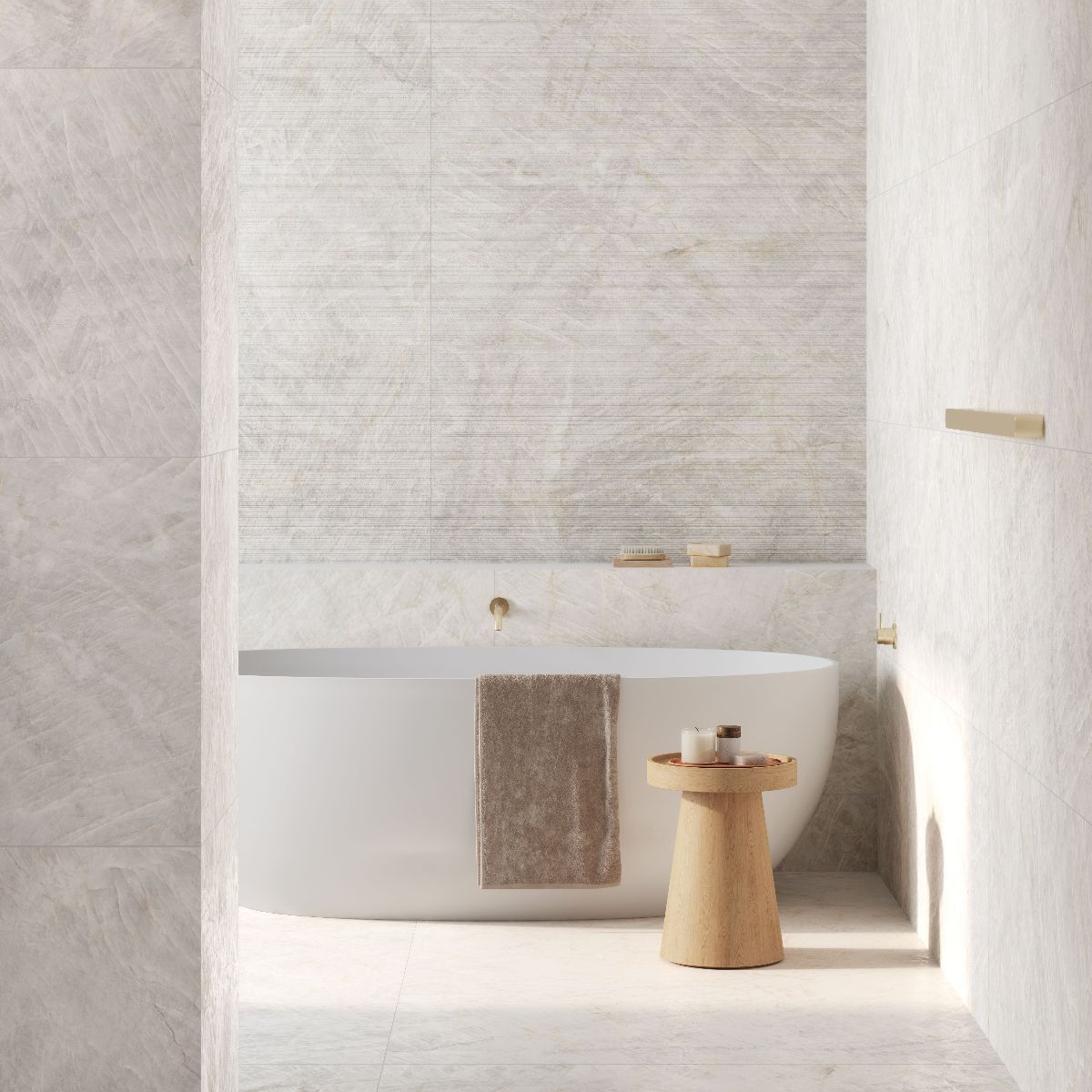
“Large-format tiles suit bathrooms and wetrooms perfectly, helping to create a spa-like feel; just be sure to pick ones with a high slip-resistance,” says Harriet. And Isabel agrees, adding, “We see lots of homeowners opt for large-format tiles in the shower – they are easy to clean and can open up the space.”
However, the key to incorporating large-format tiles is to let them do the talking, says Harriet. “In kitchens, a large-format splashback works well, creating a clean, easy-to-maintain surface that doesn’t interrupt the look of the room but still adds a stylish finishing touch to it,” she advises. “In bathrooms, that means using the same large-format tile on the walls and floor to make the space feel bigger and more cohesive. It works well when you select tiles in lighter shades to help enhance feelings of space and bounce light around the room.”
Key considerations
If you are thinking about going big with your wall tiles and flooring, there are a few practicalities to keep in mind. One of the most important aspects is that large-format tiles require a flat base. “If it isn’t flat and stable, it can lead to uneven edges or, in some cases, cracking over time. You may find that floors and walls often need extra preparation to make sure everything is level before tiling begins, which might mean some additional groundwork first,” explains Harriet.
Colin Lincoln-Evans, head of buying at Tile Mountain, agrees, adding that it’s also worth allowing for careful planning around pipework, niches and corners, “as cuts are more demanding on bigger formats and can increase wastage”.
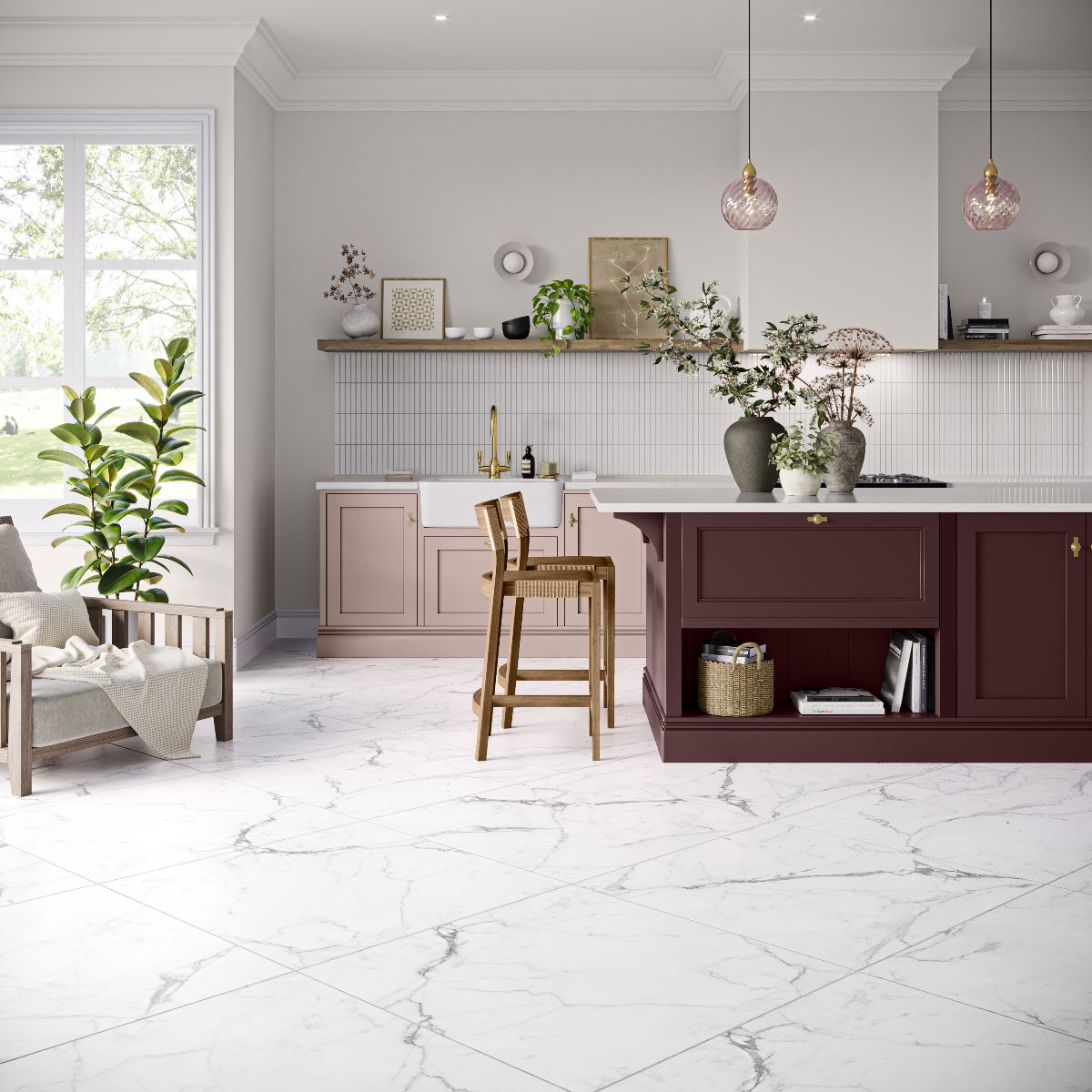
Another key consideration is the layout. “The vast majority will lay large-format tiles in a uniform stack versus a staggered bond to ensure the flow from tile to tile feels continuous,” says Isabel. “In order to achieve this, think about where cuts will be required and where you want them to sit to avoid breaking up the space visually,” she advises.
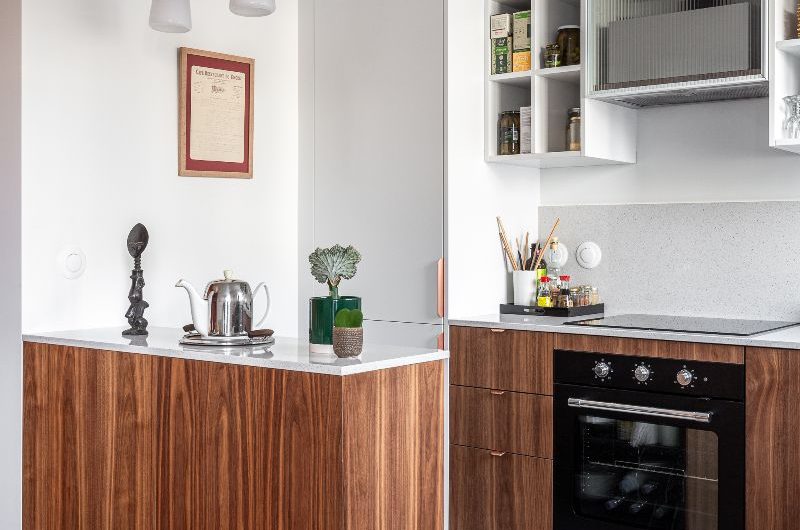
“Always plan the tile layout first so grout lines fall neatly around focal points like vanity units, mirrors and shower niches, as that small detail is what makes the result look properly polished,” adds Colin.
And speaking of grout, it’s important not to overlook it as it can make or break your design. For a seamless finish, opt for a complementary grout colour to your chosen tiles. “A contrasting grout can add definition and highlight the shape of the tiles, while darker grout shades are often more practical, as they tend to show less everyday dirt and wear, particularly in busy kitchens and bathrooms,” says Harriet.
Lastly, depending on the size of your tiles, Isabel notes you may find installation costs may increase, as sometimes they require two people to install due to their format.
Spotted on social
Enjoyed this post? Click here for tile trends for 2026, from delicious colours to daring patterns
About Post Author