Often behind closed doors, the pantry is a true workhorse of the kitchen…
So, don’t they deserve to be beautiful as well as functional? (Yes, they do by the way!) Below, KBB journo Charlotte Luxford showcases some of the best pantries we’ve seen lately…
Centre stage
This pantry has been cleverly positioned so it can be accessed from the kitchen, hall, and larder. It’s been designed as a back-up kitchen – a place to store food, display pretty china, and also as a through room from outside.
“There is an incredible vista from the main hall through the yellow-painted side hall into this deep, rich, red room, and then passing into the larder and outside beyond,” says interior designer Octavia Dickinson. “We used gloss paint, which is very hardy, and faux Carrara worktops for the same reason.”
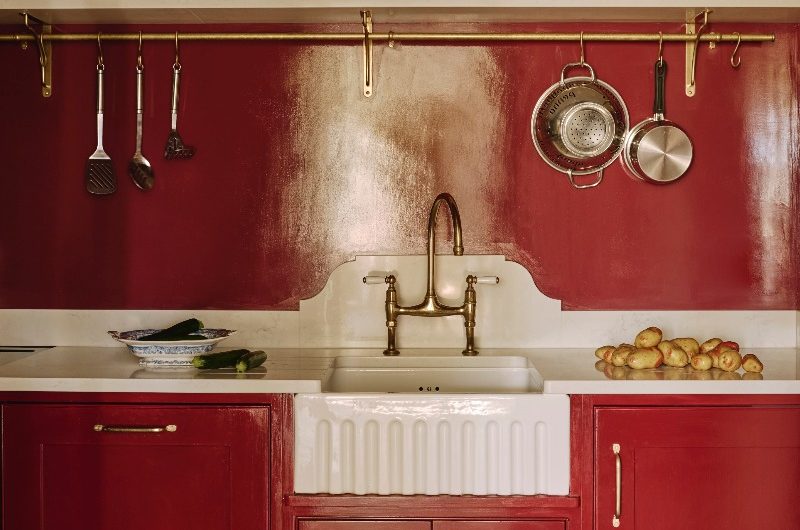
There’s also an extra dishwasher, cooker, and basin, so the room works great as a second kitchen when hosting in the main one. The rail is aesthetically pleasing but also acts as a clever place to store extra utensils and pans.

Hide and seek
This kitchen pantry makes exceptional use of a compact footprint, transforming what was once an unused corner of the home into a highly efficient, multipurpose space.
“Concealed behind a secret doorway, the room opens to reveal a beautifully practical layout that fulfils the brief for ample storage and a sturdy, commercial-style sink, perfect for washing the dog,” says Kasia Piorko, founder of Kate Feather Kitchens.
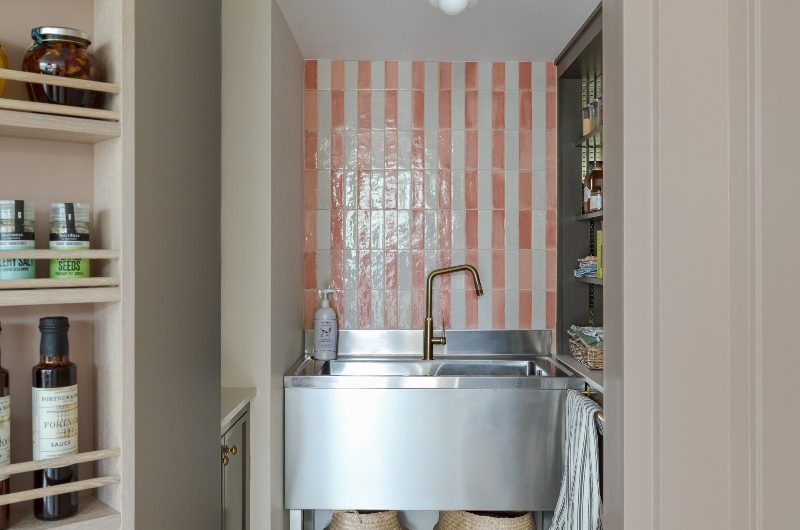
Shelves line the right-hand side wall, while a spice rack is cleverly placed on the entrance door for easy access from the kitchen. Two shallow units fitted on the left-hand side house small appliances and a microwave. “Soft pink and coral Claybrook tiles add warmth and character,” notes Kasia. “Despite its size, the design feels light, ordered, and thoughtfully composed – an elegant, hardworking pantry.”
Coffee stop
The starting point for this petite walk-in pantry was the homeowner’s daily routine – a key part was their morning coffee ritual.
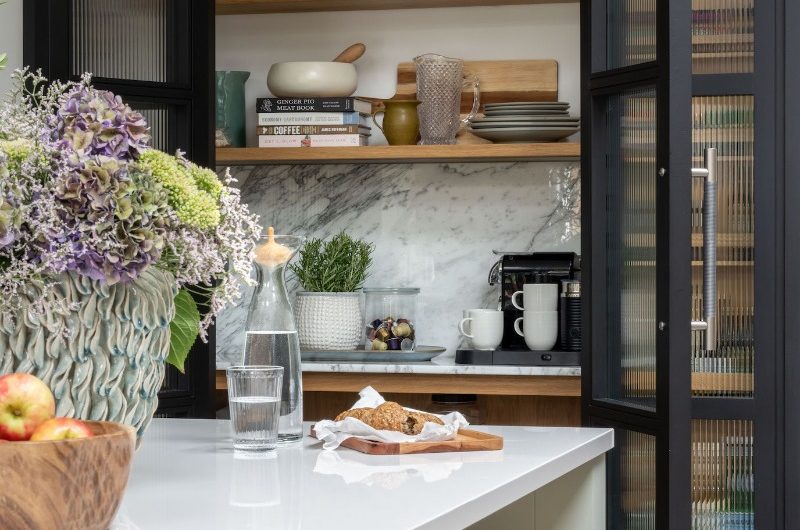
The dedicated countertop coffee zone with integrated power and lighting was designed to be functional as well as beautiful. The marble splashback adds a sense of luxury and reflects light back into the space, while Harvey Jones maximised the space by taking the cabinetry right up to ceiling height.
The mix of open shelving and concealed storage ensures everything has its place. “The fluted glazed doors were a deliberate choice, softening the darker cabinetry and allowing light to filter through while subtly concealing everyday essentials,” says Charlotte Dubery, designer at Harvey Jones. “It’s a perfect example of form and function working in harmony.”
Clever swap
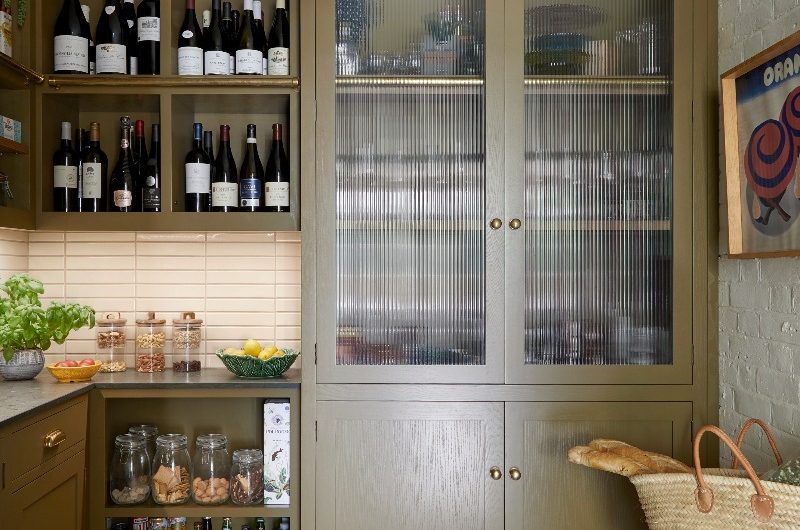
This generous pantry was previously a utility room, originally accessed via the hallway. Interior designer Fiona Duke made a new opening instead, leading into the new open-plan kitchen, so the space would have a better connection with the cooking zone, and allowed for direct access to the larder.
Photography: Anna Stathaki.
“We wanted to maximise storage but also keep it feeling very open and accessible for functionality,” she explains. “The ceilings are tall so we incorporated a bespoke ladder into the design, which sits on a bespoke brass pole that continues into the glass dresser unit – we were able to do this by setting the shelf depth back slightly.”
Fluted glass on the dresser unit hides an array of glasses and serveware without the need to keep it too neat. Luxmoore & Co completed the bespoke joinery, with flooring from Mandarin Stone and wall tiles from Domus.
Bold kitchen pantry
The bold floral motifs of the wallpapered entrance create a dramatic frame for this pantry, drawing in the eye with pops of red and light blue joinery. Floor-to-ceiling storage ensures a functional layout where everything has its place, and open shelving introduces a sense of lightness, while allowing for a curated display.
“As a finishing touch, the hardware provides sculptural interest and tactile appeal,” says Massimo Buster Minale, founder and creative director of Buster + Punch. “This bold yet refined choice elevates the scheme, creating a striking design feature while providing practical storage for utensils and other cooking equipment.”
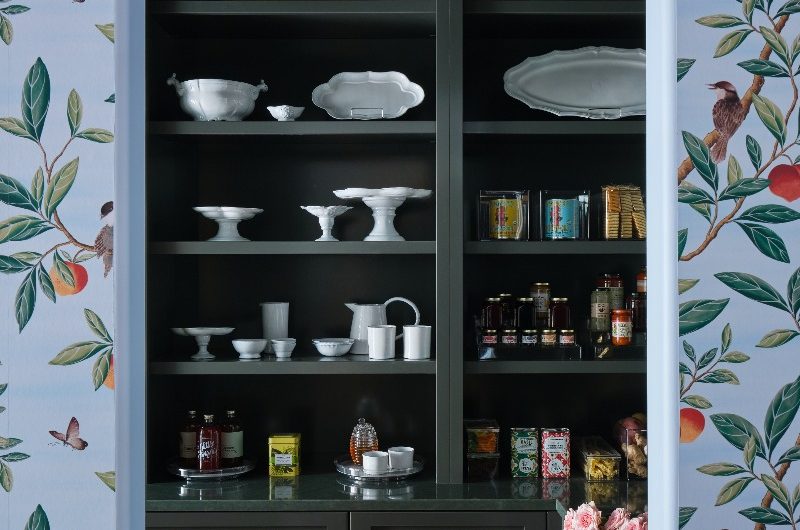
Small but mighty pantry
Despite the fact this pantry occupies the footprint of standard wall units, it was conceived as more than practical storage. “The intention was to break up a long stretch of joinery and introduce an additional point of interest within the kitchen,” says Reuben Ward, lead designer at Blakes London. “To achieve this, the pantry is partially obscured behind fluted black-framed doors, creating a layered, architectural moment rather than a continuous wall of cabinetry.”
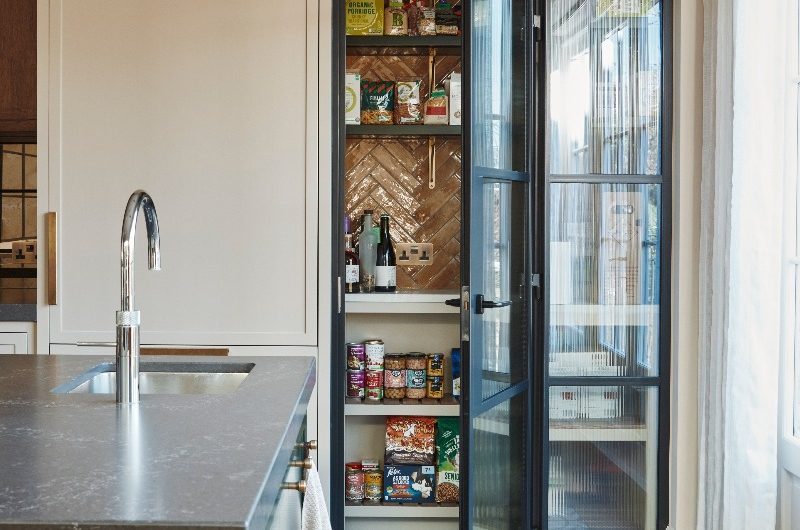
Inside, zones maximise usability. Heavier items, cleaning supplies, and footstools are stored at floor level for easy access, while a compact worktop offers a surface for small appliances. Narrower, mid-level shelving accommodates frequently used items, while higher shelves provide storage for those used less often. “The result is a highly considered cupboard that balances visual impact with everyday functionality,” adds Reuben.
Divide and conquer
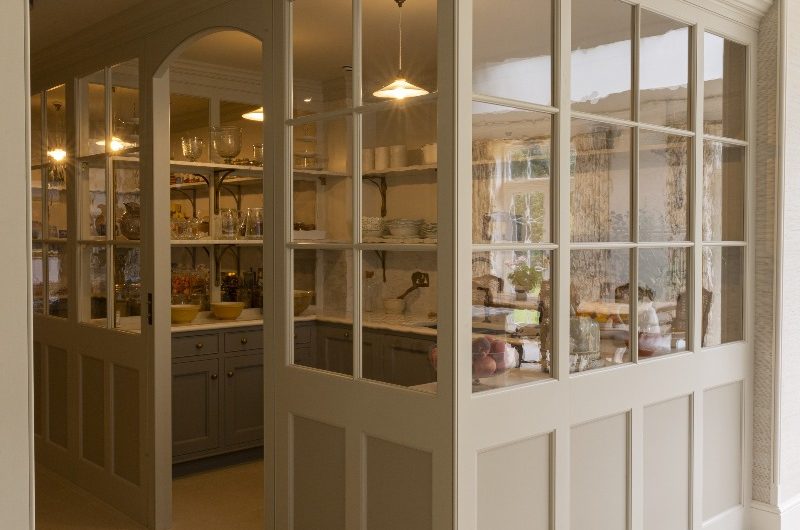
In a Regency house in Hampshire, Artichoke was asked to reconfigure the back-of-house rooms to enable seamless flow and elegant running of the household. The lack of walls inhibited storage, a problem addressed by breaking up the space with functional areas – scullery, pantry, and a cold storage room all running off a long corridor.
“The pantry shown here, along with the cold storage room, was to function almost like an internal shop, with capacity to store provisions to cope with a large household over Christmas and other family occasions,” explains Bruce Hodgson, founder of Artichoke. “The chain of glazed rooms along the corridor lends atmosphere while borrowing light from the main kitchen.” ‘Float glass’, the restoration glass used, makes the rooms feel like an original feature from an earlier era.
Natural fit
This beautifully designed pantry by 202 Design for House Nine Design makes the most of a small kitchen through thoughtful planning and clever detailing.
The tall yet shallow shelving ensures every jar and container is visible and within easy reach, preventing wasted space at the back of deep cupboards. The curved oak doors add a soft, welcoming look and blend seamlessly with the kitchen, drawing attention to tone, texture, and balance, as well as the earthiness of the timber and natural stone.
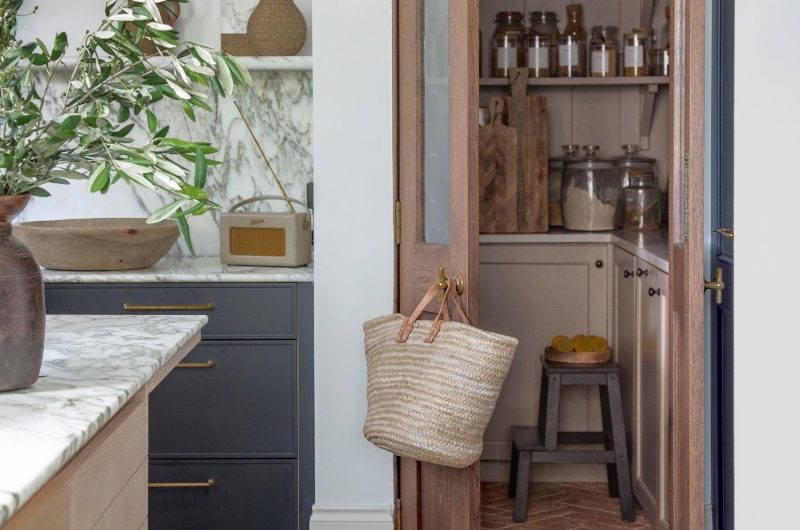
“The runner in the foreground anchors the whole scheme,” says Kirsty Barton, Alternative Flooring’s brand storytelling manager. “Its soft neutral tones highlight the natural hues of the wooden doors, terracotta floor tiles, and woven basket, tying together the different textures.”
Enjoyed this post? Click here for tips on styling your kitchen pantry
About Post Author