Want to know why each fixture deserves its very own space – and get inspired along the way? KBB journo Laurie Davidson shows how the art of bathroom zoning is far more than a trend…
I’ve found that you tend to hear a lot about zoning in interiors. But what are the actual benefits of it when it comes to your bathroom? Is it a notion saved for larger spaces only?
The answer, I’m afraid, is probably slightly vague, in that it’s really down to personal choice – there’s no right or wrong. However, what zoning can do is help to define each part of your bathroom to give it a clear purpose, as well as adding privacy (when needed) and allowing multiple users to be in the room without obstructing each other.
What are the benefits of bathroom zoning?
In short, it can contribute to a much more organised and functional space, whatever its size. As for how to go about zoning your bathroom, there are many different ways, from small, simple tricks such as using paint to give an area its own identity, right down to building different floor levels or using stud walls to create a ‘room within a room’.
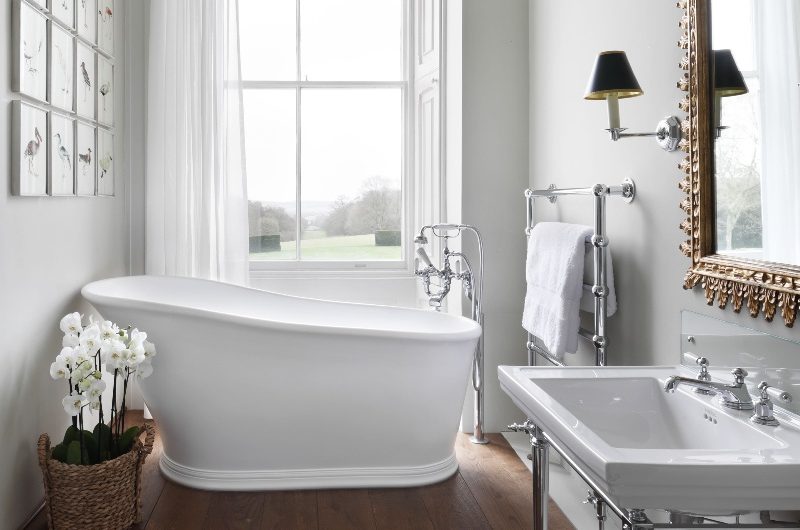
Zones are also a great way to split the dry area from the wet, with the benefit that you can use different – more suitable – materials in the wet area, leaving the dry zone to focus on storage and lighting.

Of course, within each zone, it’s a good idea to consider the practicalities of it as a singular space, as well as how it will sit within the room as a whole. The lighting, materials, and finishes should suit that zone’s particular function. After all, you wouldn’t want a vanity area with poor lighting or a bath without a surrounding waterproof floor, for example.
Ready to see some examples of clever bathroom zoning? Let these ideas whet your appetite…
Partition walls
Whether low or high, partition or stud walls can offer not just separation, but also privacy. “When creating a large bathroom layout, potentially for more than one person to use, dividing the area into a broken-plan format allows for greater privacy,” says Yousef Mansuri, director of design at C.P. Hart.
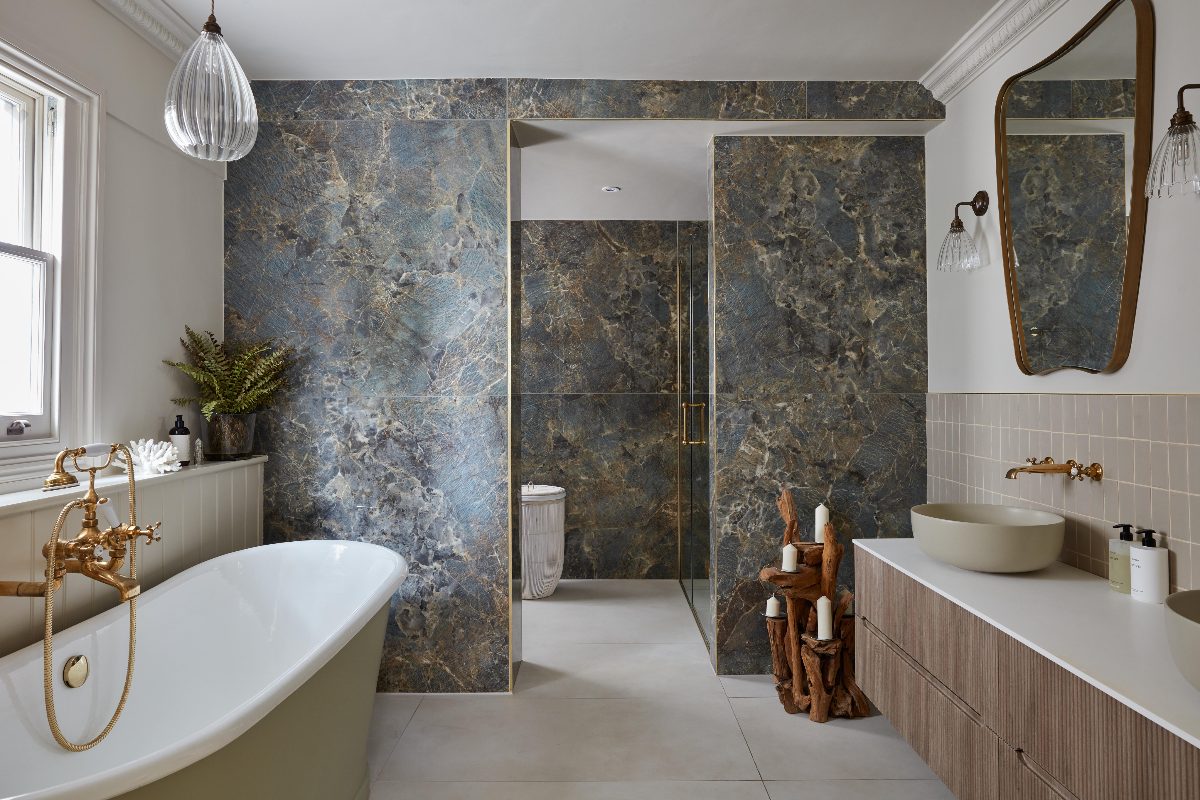
“For primary ensuites, or for family bathrooms, a stud wall with an open doorway will elegantly separate the bathing area from the shower zone. By featuring the same tiles throughout, together with matching brassware, the design elements can be co-ordinated and the overall space will feel unified.” You don’t have to have a high stud wall, either – a low wall is a great way to conceal a toilet out of sight line, for example.
Defined bathroom lighting
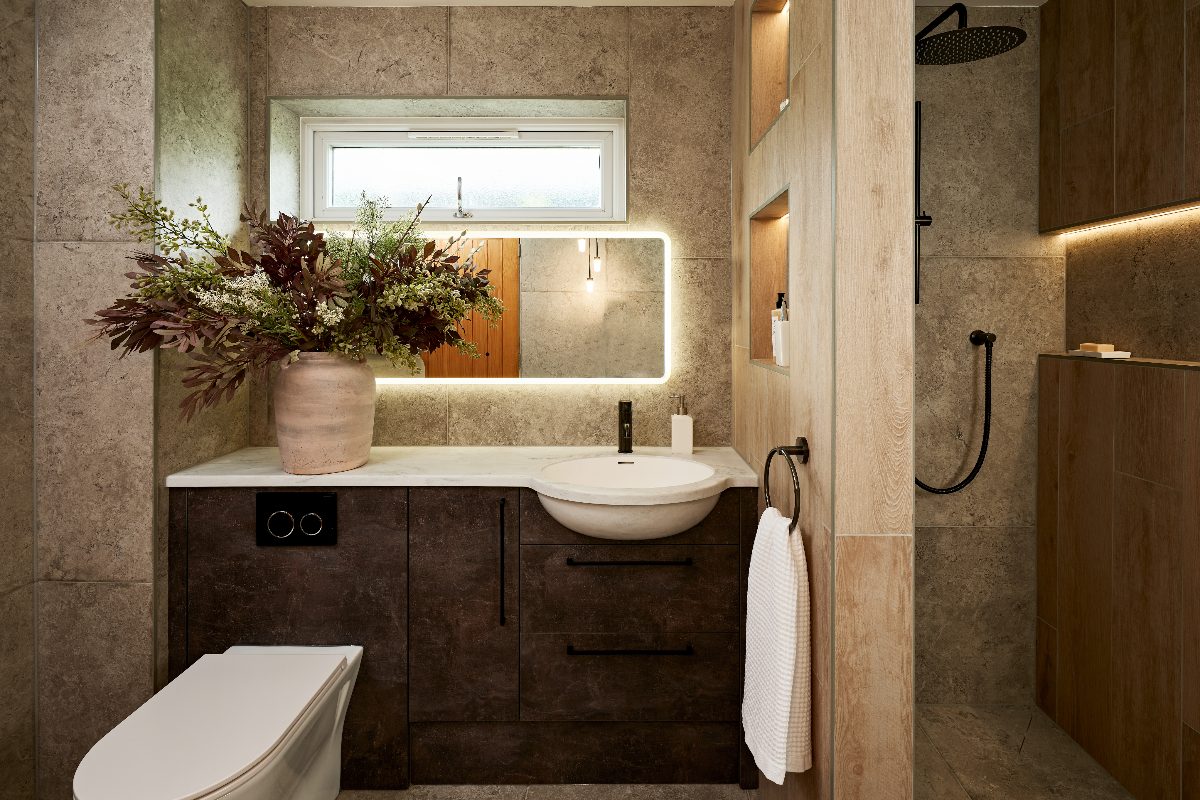
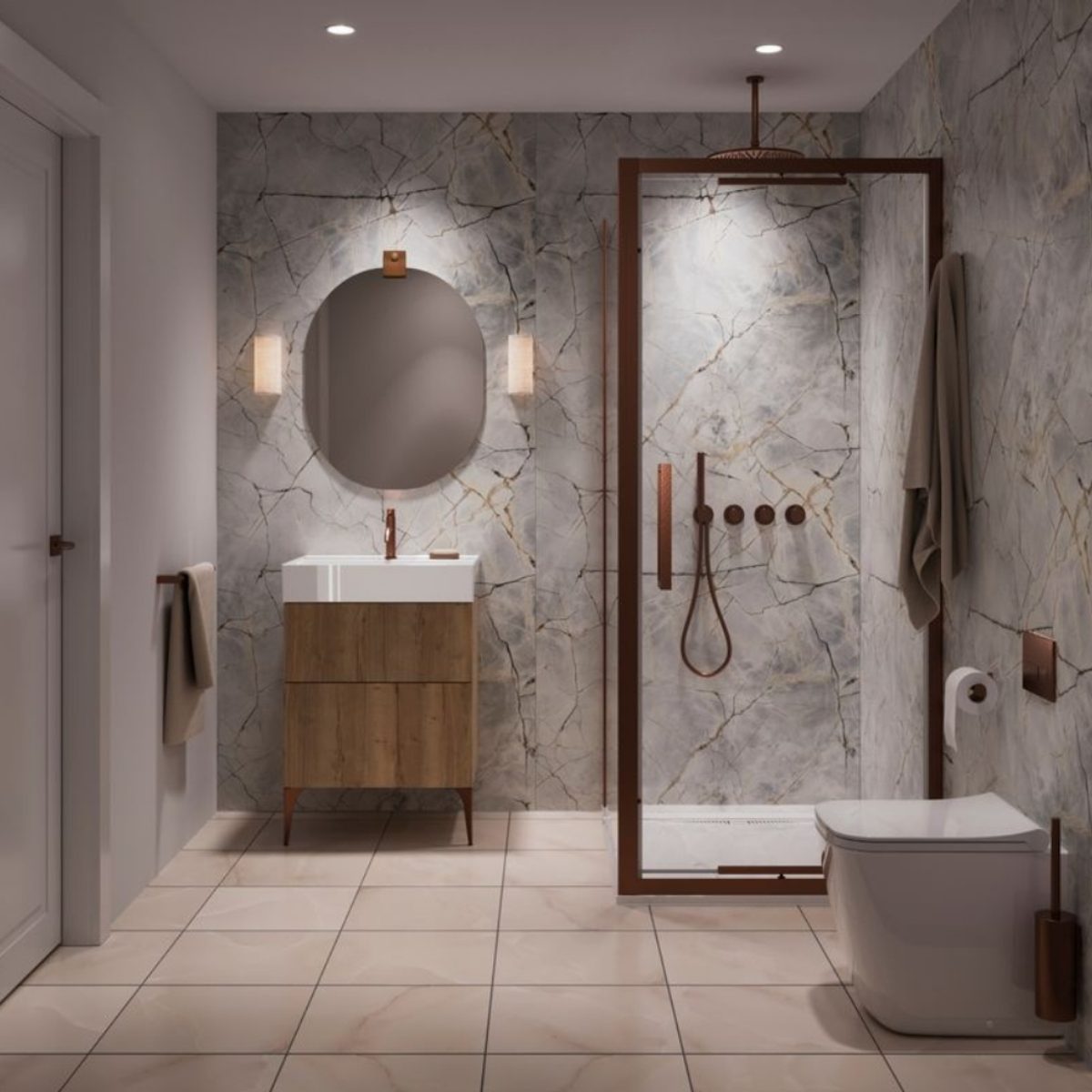
Whether you have a spacious or a more compact bathroom, using lighting to zone the areas can ensure each one is practical, while adding ambience as required. The vanity, for instance, may need brighter lights in which it’s easy to do make-up, while the bath area can be lit to keep it as relaxing as possible. “When planning your bathroom, consider zoning the area around the bath to create a distinct sense of retreat,” says Caroline Milns, head of interior design at Zulufish.
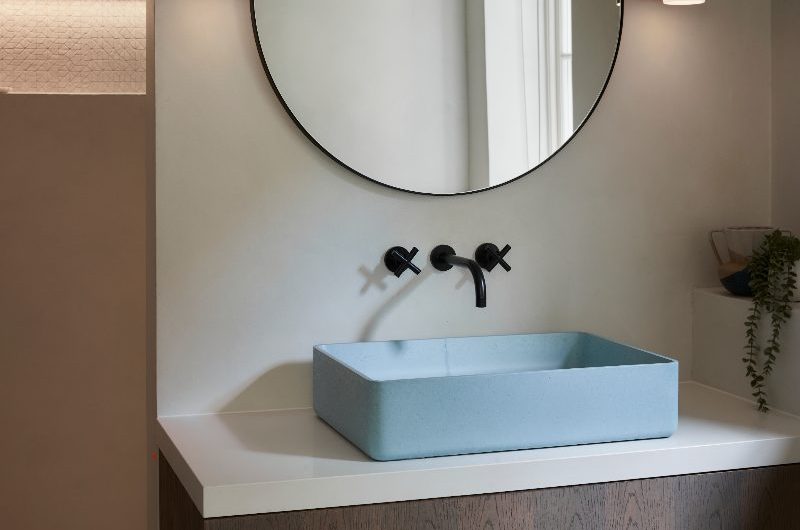
“Envelop the space in elements that feel cocooning, such as soft, layered lighting, perfectly positioned at each end of the bath to introduce a sense of drama and elevation. This approach evokes the sensation of stepping into a private sanctuary. Take it a step further by wrapping one end of the room in a deeper, evocative shade to create intimacy and visual depth,” says Caroline.
Paint tricks
Perhaps the simplest yet equally transformative way to zone an area, paint works beautifully to help visually divide a space. It’s ideal for smaller bathrooms, when you may not have room for a partition wall or the same flexibility when it comes to positioning fittings. Paint a whole wall or just part of a wall in a different colour and it will immediately help your space to stand out. “Zoning a bathroom with paint is a clever way to define areas without the need for structural change,” comments Bailey Williams, colour expert at Earthborn.
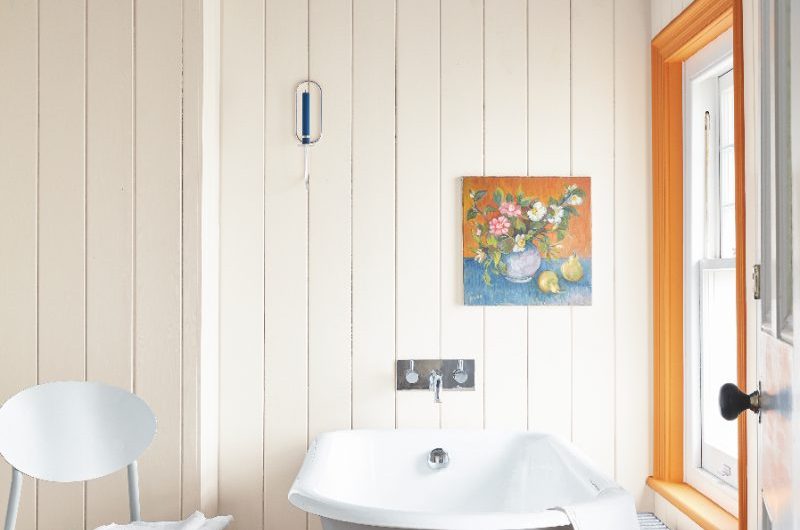
“By using contrasting colours or finishes, you can subtly separate the vanity area from the shower or bath zone, making the space feel more organised and intentional. Lighter tones are ideal for areas where you want to maximise brightness, while deeper, richer hues can be used to create a feature wall or add intimacy around a bath. Another effective trick is painting the bottom half of the wall in a darker shade behind the sink – this not only gives the illusion of more space but also creates a natural frame and a striking focal point.”
Tile zones
One of the most versatile, and dare I say, fun ways to zone your bathroom is using tiles. Whether you choose different patterns, colours, scale, or even the layout of your tiles to define an area, you can really bring each zone to life and help to give it its own identity. Grazzie Wilson, head of creative at Ca’ Pietra, says: “Around a freestanding bath, laying a framed border on the floor or introducing a vertical stripe behind the tub immediately anchors it as the feature of the room. The bath feels set apart, yet the tile links it back into the wider design.”
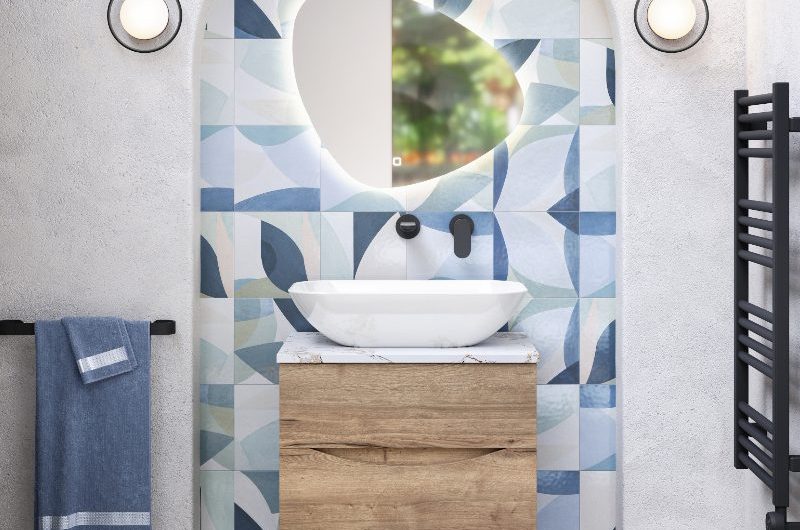
“The same principle can be applied across the whole bathroom. A shower zone might use smaller-format tiles or mosaics to create a cocooning feel, while a vanity can be given presence by switching to a contrasting tone or a different laying pattern, such as herringbone. Even subtle shifts in grout colour can mark a transition from one area to the next,” she continues.
Different bathroom floors
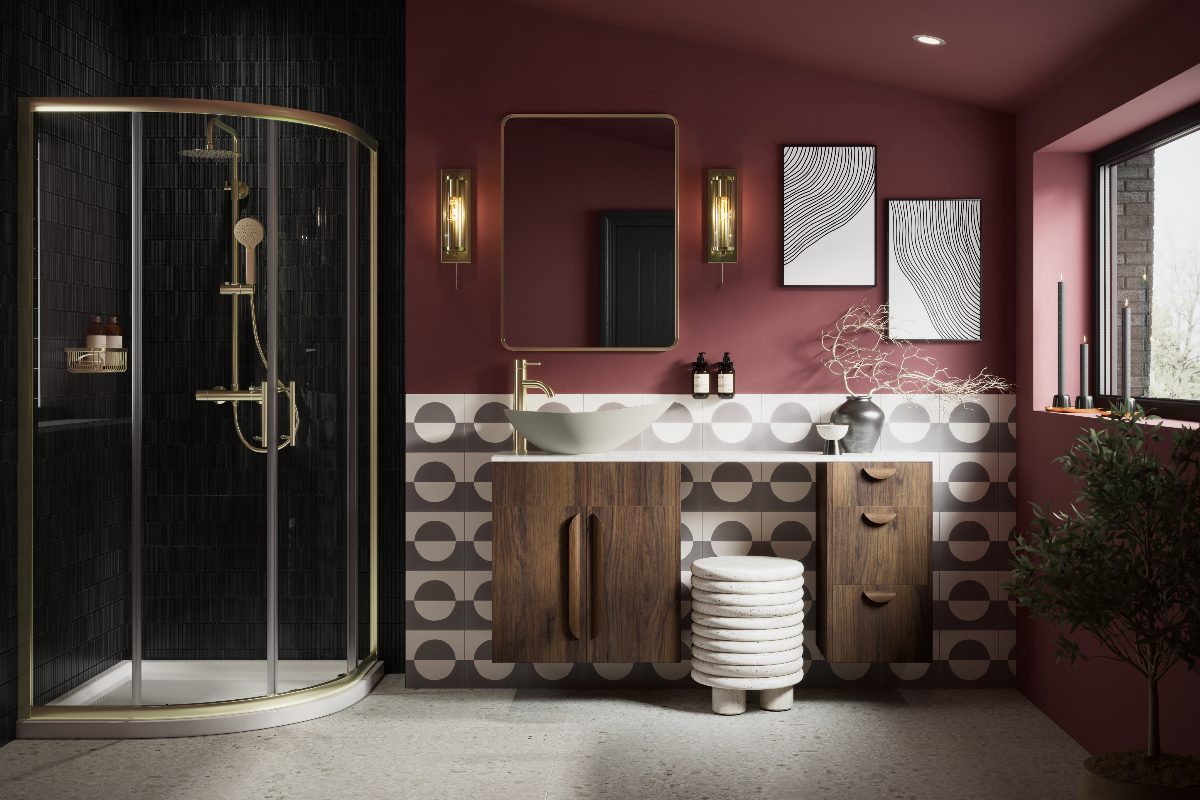
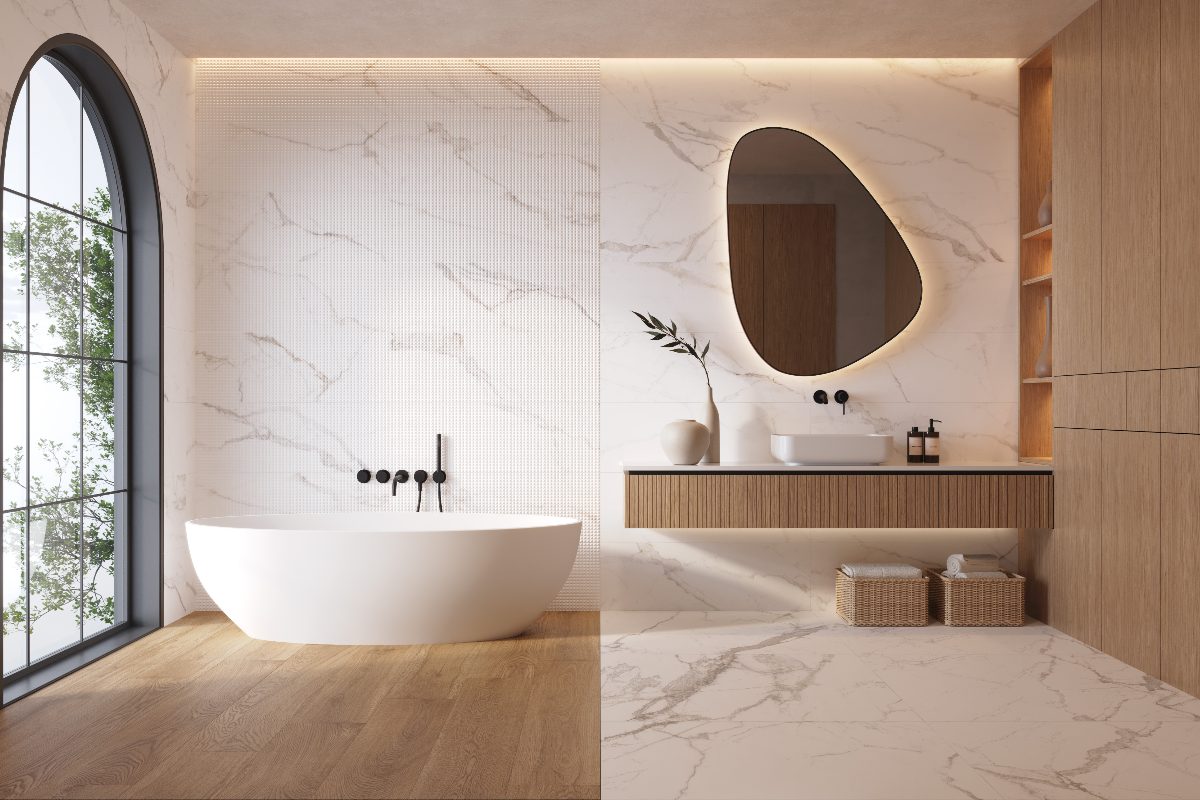
Having a change in your flooring materials is an easy way to separate the zones. “Textures can really help to define different areas in your bathroom,” says Paul Sewell, managing director at Lifestyle Floors. “You could choose a textured, stone-effect luxury vinyl tile in one zone of the bathroom, then pair it with a smooth, wood-look tile in the rest of the room, for example. This textural difference makes each area feel distinct.”
Glass screens
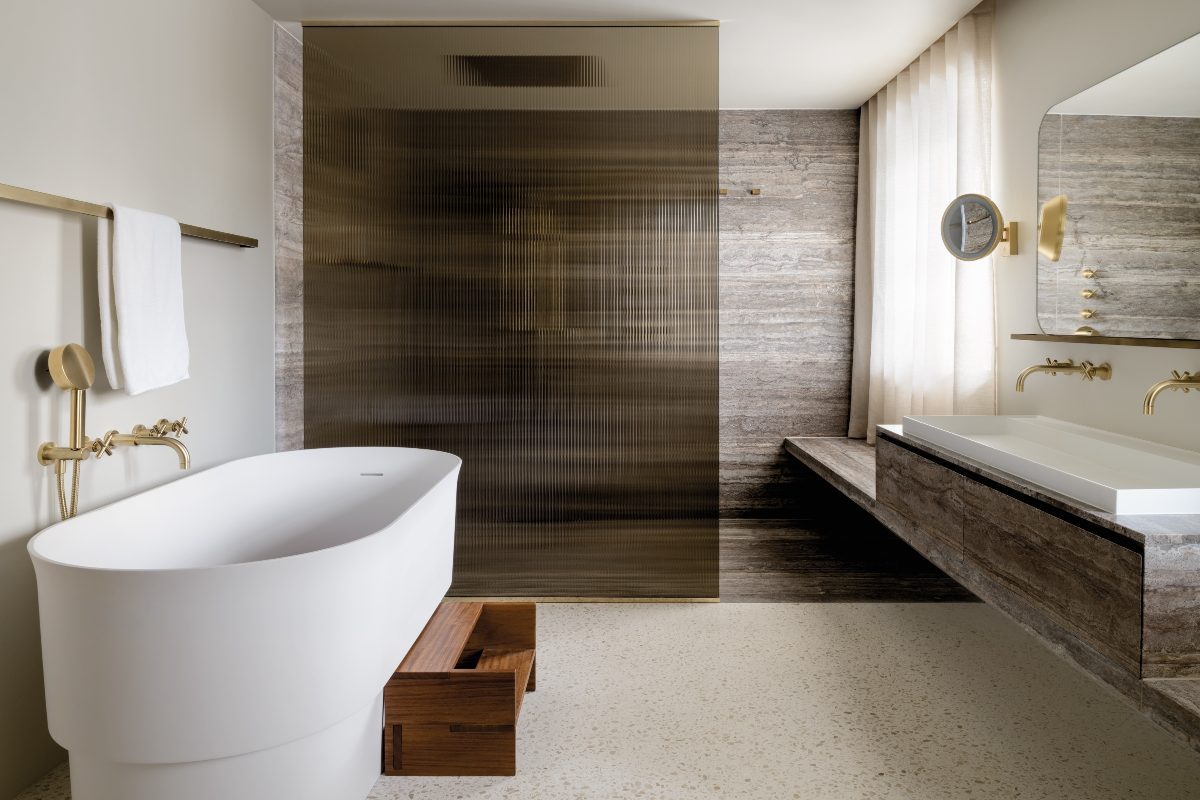
While a wall can be an excellent way to separate bathing zones, you may want to consider one that you can see through. “For physical separation, consider installing a glass screen to clearly define a wetroom or toilet area, while maintaining the natural light and spacious feel,” advises Jorge Hernandez, head of design at Crosswater. “This not only serves a practical purpose but can also become a bold design feature itself.”
Looking at location
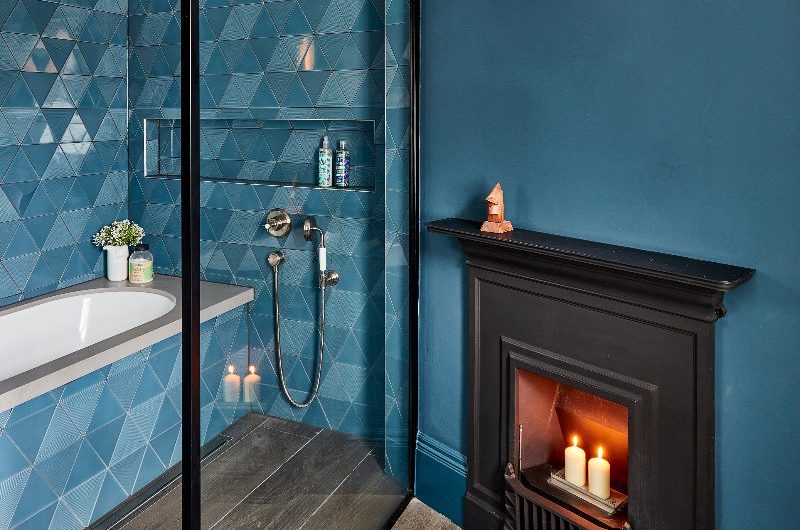
Where you choose to site your fittings can play a big part when it comes to zoning. For example, placing a bath at a jaunty angle in a corner of the room will give it a clear identity, while using existing architectural details, such as alcoves, an arch, or even a sloping roof can instantly create a defined space. Making a feature of these individual areas, using tiles, paint, lighting, and different materials, will all help bring the space to life.
Level changes
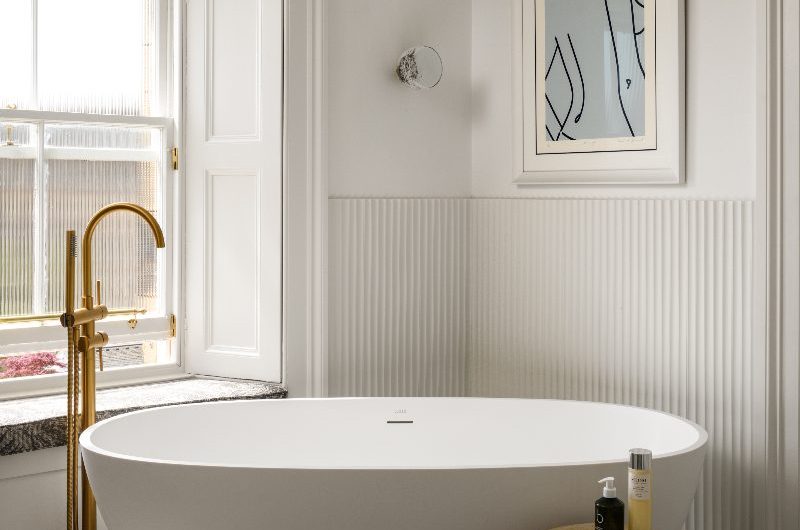
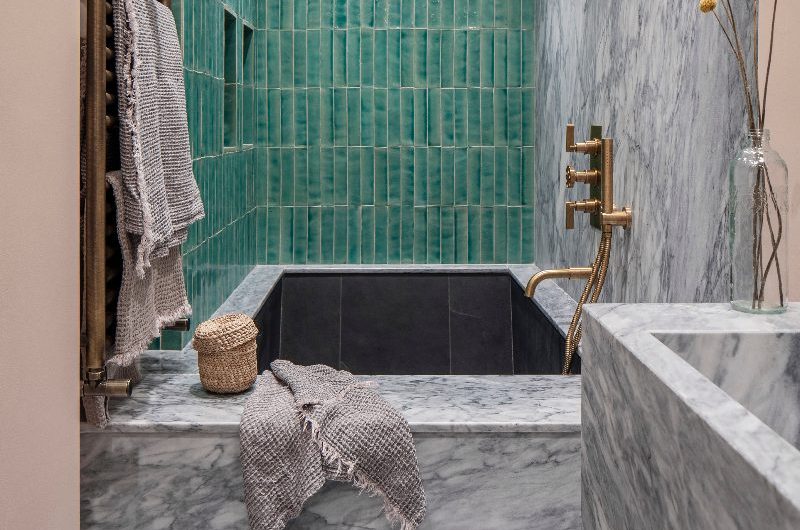
You don’t have to have a large bathroom to incorporate a level change; and it can create a big impact when it comes to zoning. “Introducing a small step or raised platform under the bath or shower creates a natural shift in zone – ideal in open-plan bathrooms or to add drama to a feature bath,” says Pia Pelkonen, creative director of Pia Design.
Bespoke bathroom furniture
In larger bathrooms, rather than having a singular basin looking lost by itself, framing it within bespoke furniture can create more of a ‘zone’ – and give you extra storage to boot. If you have room, a double sink unit, complete with double mirrors and wall lights, can create a pleasing vanity area. “Framing a unit with symmetrical lighting and mirrors creates balance and establishes the vanity as a distinct focal point,” says Jenna Forsdyke, interior designer at Pfeiffer Design.
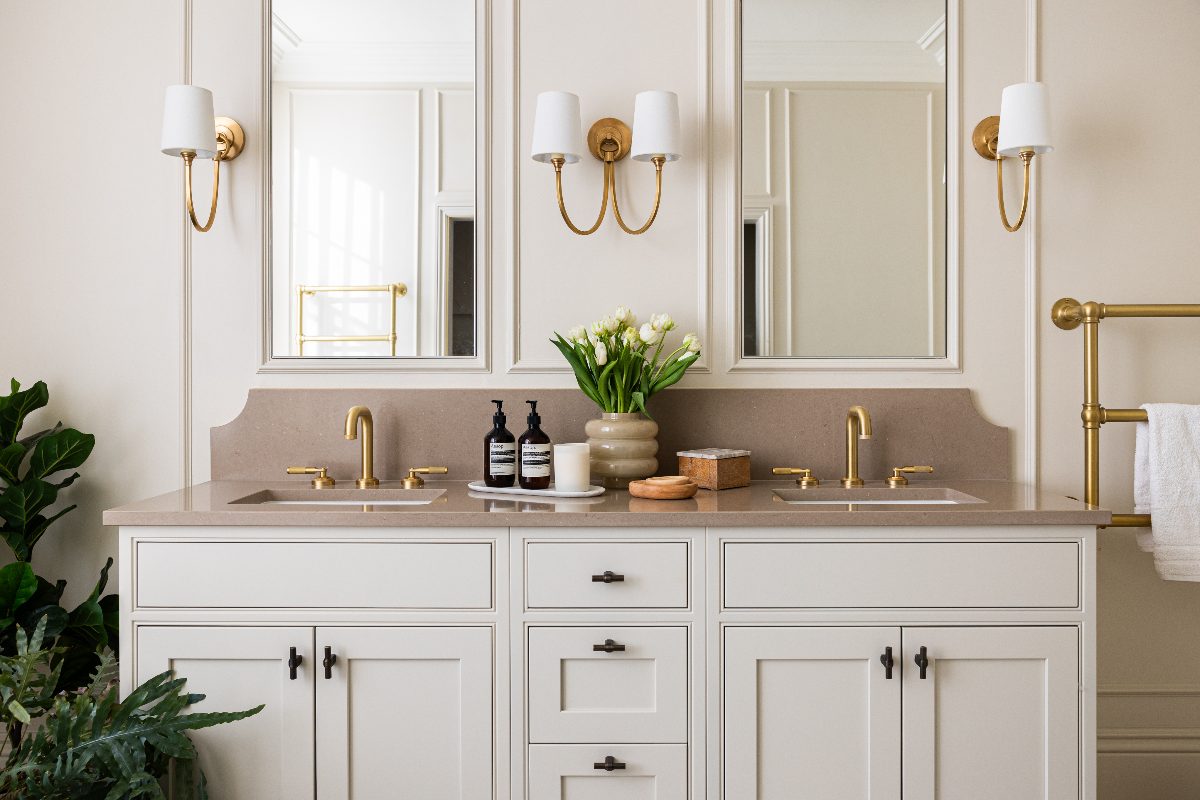
“By positioning wall lights either side of each mirror, you can achieve flattering and functional lighting, which also creates an architectural element that ‘zones’ the space. This helps to subtly separate the vanity from its surrounding areas, such as a shower or a bath, giving it its own presence.”
Does bathroom size matter? Click here to find out
About Post Author